MedTech Meets AI: The New Age of Alzheimer’s Detection

Article Summary
AI is reshaping Alzheimer’s detection by enabling earlier, faster, and less invasive diagnosis. By combining advanced neuroimaging analysis, speech and cognitive monitoring, and emerging blood-based biomarkers, AI-powered medtech tools can identify subtle preclinical changes years before symptoms appear. While challenges around data privacy, bias, and regulation remain, AI offers a clear path toward earlier intervention and more precise Alzheimer’s care.Article Contents
How AI is Changing the Alzheimer’s Timeline
Nearly sixty million people suffer from neurodegenerative diseases such as Alzheimer’s, and sadly, there is no cure. Alzheimer’s begins years before the symptoms like memory loss or confusion appear. Amyloid-β plaques slowly accumulate and silently disrupt neuronal communication. The brain reaches an irreversibly damaged state by the time symptoms show up. Unfortunately, the traditional diagnosis relying on clinical symptoms, neuropsychological testing, and costly brain imaging often detects Alzheimer’s only after significant cognitive and neuronal decline. To face the challenge, the medtech industries are embracing newly evolved artificial intelligence (AI) to revolutionise early-stage Alzheimer’s detection by using faster, non-invasive, and accurate predictive techniques.

Early Alzheimer’s Detection Matters
Even with modern medical interventions, Alzheimer’s cannot be detected before neurodegeneration and cognitive decline set in. Therefore, the timely detection, halting progression, and improving the quality of the prior two are the goals of current Alzheimer’s medicine practice. The current diagnosis uses cerebrospinal fluid and brain images to detect the Alzheimer’s phenotype. Both processes are invasive and expensive, yet not very efficient for early detection. To ensure accurate detection and preclinical Alzheimer’s identification, associated secondary implications, such as behavioural abnormalities, sleep disturbances, sensory dysfunctions, and physical changes should be considered as well. Fortunately, new medtech tools, powered by AI’s technical power, are coming into the spotlight to make the early detection smoother.
MedTech Innovations in Alzheimer’s Detection
-
Neuroimaging and AI Diagnostics
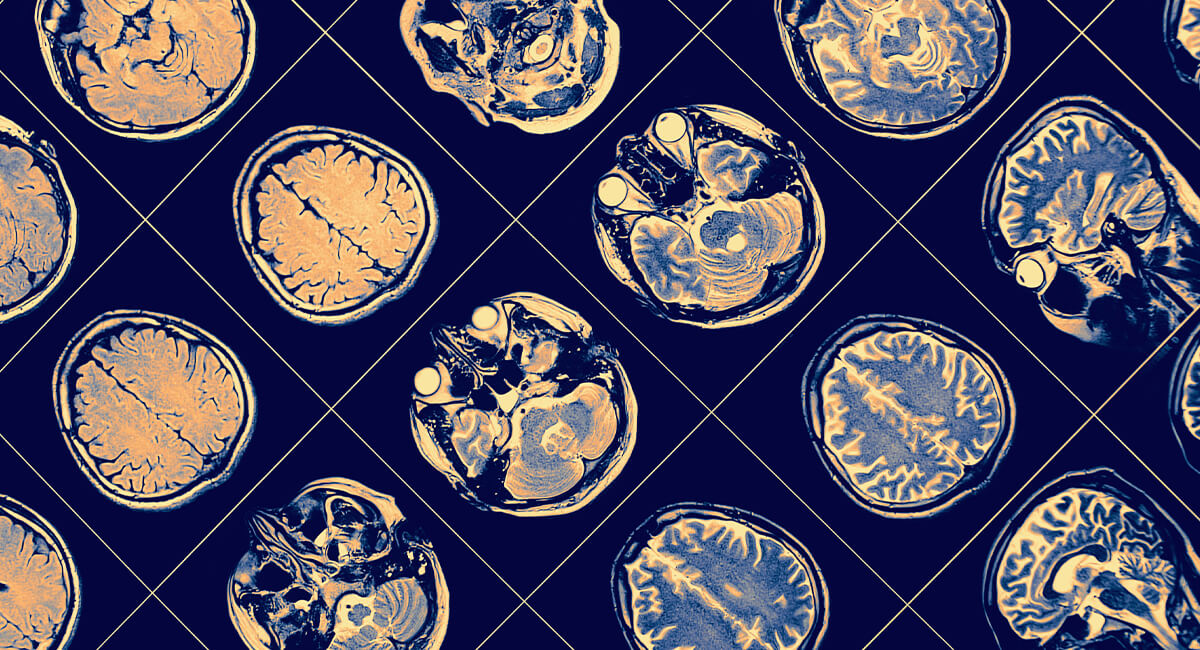
Scientists regularly use MRI (Magnetic Resonance Imaging) and PET (Positron Emission Tomography) scans to visualise abnormal Tau and Amyloid formation. These scans are efficient in detecting early-stage amyloid build-up, but the interpretation of the images is hard and time-consuming, even for experts. In situations like this, AI programs such as Convolutional Neural Networks (CNNs) and Vision Transformers can help by analysing numerous brain scans taken from different directions and making a composite to detect subtle changes in overall brain structure, including the hippocampus and cortex, that humans might miss. A group of researchers used over 7000 human brain MRI scans from 6 cohort groups and built a machine learning algorithm to train CNN networks to identify decaying brains with amyloid pathology. Dataset systems like Alzheimer’s Disease Neuroimaging Initiative (ADNI) can be a great resource to teach the newly evolved AI-based deep learning systems about the bits and pieces of early AI diagnosis. ADNI-derived and trained datasets showed high accuracy (about 99%) in detecting both aging and Alzheimer’s brains.
-
Speech and Cognition Specialist
Most Alzheimer’s patients experience blurred speech and limited vocabulary as cognitive decline progresses. AI-powered speech analysis tools such as CognoSpeak and Canary Speech can help them regain some control over their speech. These tools use recorded conversations to make storytelling examples to help with uninterrupted speech exercises. AI-based cognitive testing platforms, such as Cogstate or Cambridge Cognition can measure memory, attention, and reaction time. Being wearable, they can help to detect minute changes in cognition. The best thing about these tools is that they are low-cost and accessible on smartphones, tablets, or computers.
-
Blood-Based Biomarkers and Biosensors
Although not in the market yet, AI algorithms can enhance the precision of biomarker detection techniques such as Single Molecule Array (Simoa) and mass spectrometry. The deep learning system powered by AI can achieve precision by incorporating multimodal molecular, proteomic, and metabolomic data to identify the traces of the molecule responsible for Alzheimer’s disease.

Challenges and Ethical Considerations
With everything as accessible as AI, there is a need to proceed with caution. To protect the patients, data privacy regarding the use of speech and cognition tools should be strictly regulated. The AI models should include a diverse population to avoid bias and enhance detection accuracy. Inclusivity will also enhance the power of AI tools to correctly interpret early diagnosis. Overall, regulatory bodies such as the FDA should keep a close eye on all AI innovations that claim to help diagnosis, prognosis, or treatment processes in healthcare.

The Road with AI- Where Does It Go?
More pharma and biotech companies are embracing AI to detect early-stage Alzheimer’s. Roche, Genentech, Eisai, and Biogen have been working for years to utilise AI in early diagnosis and treatment of Alzheimer’s. Google Health recently joined the league and is exploring AI-based retinal scans for neurodegenerative risk prediction. We are looking at a future where wearables will monitor cognition and speech. AI-powered medtech tools will detect Alzheimer’s risk factors years before symptoms appear. Precision medicine, also being powered with AI would be able to delay or prevent Alzheimer’s or any such neurodegenerative disease. Hopefully it is not too far!
References
- Chen Y, Al-Nusaif M, Li S, Tan X, Yang H, Cai H, Le W. Progress on early diagnosing Alzheimer’s disease. Front Med. 2024 Jun;18(3):446-464. doi: 10.1007/s11684-023-1047-1.
- Wang, C., Zhang, W., Ni, M. et al. Deep-learning based multi-modal models for brain age, cognition and amyloid pathology prediction. Alz Res Therapy 17, 126 (2025). https://doi.org/10.1186/s13195-025-01773-z.
- El-Assy, A.M., Amer, H.M., Ibrahim, H.M. et al. A novel CNN architecture for accurate early detection and classification of Alzheimer’s disease using MRI data. Sci Rep 14, 3463 (2024). https://doi.org/10.1038/s41598-024-53733-6.
- Yamada, Y., Shinkawa, K., Nemoto, M., Nemoto, K. and Arai, T., 2023. A mobile application using automatic speech analysis for classifying Alzheimer’s disease and mild cognitive impairment. Computer Speech & Language, 81, p.101514.
- White, J. P., Schembri, A., Prenn-Gologranc, C., Ondrus, M., Katina, S., Novak, P., Lim, Y. Y., Edgar, C., & Maruff, P. (2023). Sensitivity of Individual and Composite Test Scores from the Cogstate Brief Battery to Mild Cognitive Impairment and Dementia Due to Alzheimer’s Disease. Journal of Alzheimer’s disease : JAD, 96(4), 1781–1799. https://doi.org/10.3233/JAD-230352.
- Ivarsson Orrelid, C., Rosberg, O., Weiner, S., Johansson, F. D., Gobom, J., Zetterberg, H., Mwai, N., & Stempfle, L. (2025). Applying machine learning to high-dimensional proteomics datasets for the identification of Alzheimer’s disease biomarkers. Fluids and barriers of the CNS, 22(1), 23. https://doi.org/10.1186/s12987-025-00634-z.
Disclaimer. The views and opinions expressed in this article are solely those of the author and do not necessarily reflect the official policy or position of Test Labs Limited. The content provided is for informational purposes only and is not intended to constitute legal or professional advice. Test Labs assumes no responsibility for any errors or omissions in the content of this article, nor for any actions taken in reliance thereon.
Get It Done, With Certainty.
Contact us about your testing requirements, we aim to respond the same day.
Get resources & industry updates direct to your inbox
We’ll email you 1-2 times a week at the maximum and never share your information