Surface Finish Failures in Surgical Instruments: The Hidden Risk to Compliance

Article Summary
Microscopic surface finishing failures in reusable surgical instruments can compromise sterilisation, patient safety, and regulatory compliance, despite appearing visually flawless. Without proper electropolishing, passivation, and validation, manufacturers risk introducing hidden defects that cascade into clinical, operational, and financial failures.Article Contents
The Risk Behind a “Perfect” Finish
Within the rigorous compliance architecture of the European Medical Device Regulation (EU MDR 2017/745) and the UK Medical Devices Regulations (MHRA), the trajectory of a Class Ir reusable surgical instrument from a manufacturing hub like Sialkot, Pakistan, to a European operating theatre is heavily dependent on material science.
Artisanal craftsmanship excels at shaping complex, ergonomic geometric profiles. However, a pristine macroscopic aesthetic often masks latent structural deficiencies.
For UK and European healthcare consultants, the critical battleground for regulatory conformity is not structural forging; it is the surface chemistry.
A reusable surgical instrument must endure hundreds of aggressive, high-temperature, highly alkaline reprocessing and sterilisation cycles within NHS Sterile Service Departments (SSDs) under HTM 01-01 (Health Technical Memorandum) frameworks.
When sub-tier manufacturers treat post-abrasive surface finishing as a cosmetic treatment rather than an exact electrochemical science, they introduce a catastrophic “invisible flaw”.
By systematically bypassing or mismanaging electropolishing, chemical passivation, and standardised pre-shipment validation (the boil test), manufacturers compromise technical file integrity, endanger patient safety, and expose international distributors to severe liability.
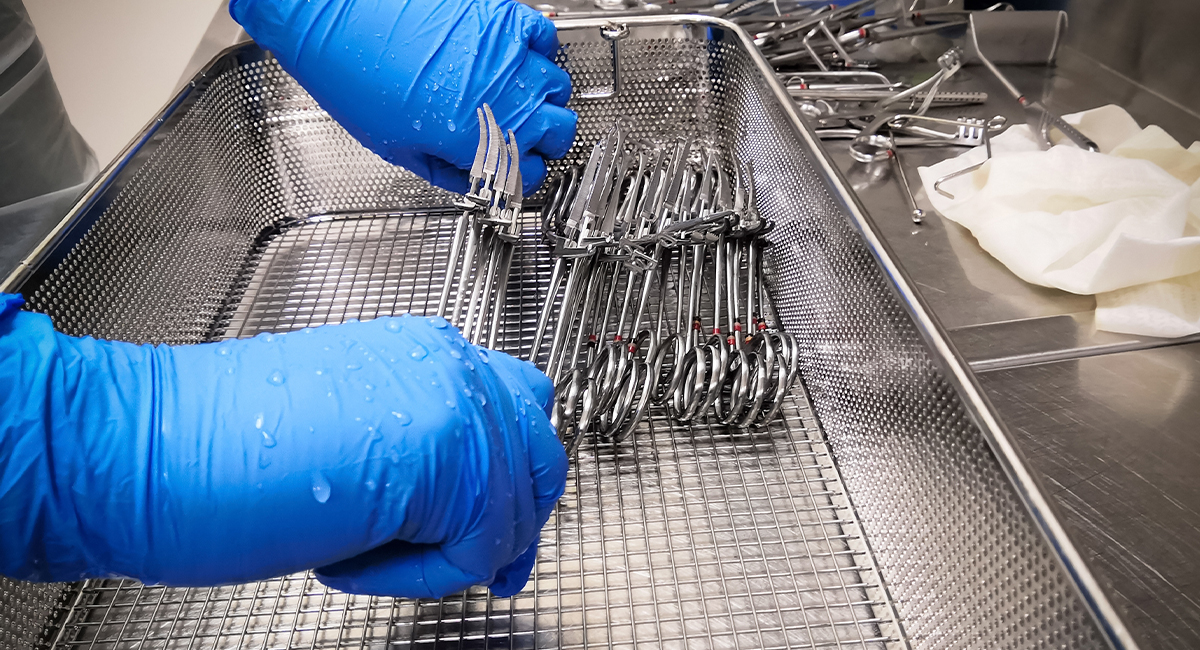
Surface Finish Failures: Where Manufacturing Breaks Down
Microscopic surface vulnerabilities are rarely accidental. They are frequently the direct outcome of uncalibrated, unmonitored processing on the factory floor.
Unregulated Electropolishing: A Critical Process Failure
Hand-finished instrumentation inevitably retains microscopic fissures, subsurface inclusions, and structural burrs – particularly within high-stress zones such as box locks, ratchets, and serrations.
Competent manufacturing relies on electropolishing as a controlled electrochemical asset to systematically strip away a microscopic layer of surface material, dissolving burrs, closing micro-fissures, and creating an ultra-smooth, low-energy topography.
In practice, this process is frequently executed by completely untrained operators who treat electrochemistry as a time-based immersion exercise.
Critical metallurgical variables are routinely ignored:
- Electrolyte Specific Gravity: Acid concentration and chemical bath depletion are left unmeasured.
- Anodic Current Density (A/dm^2): Electrical parameters are rarely calibrated relative to the total surface area of the component lot.
- Kinetic Control: Solution temperature and agitation variables are completely unmonitored.
Consequently, the underlying steel retains micro-voids and trapped carbonaceous debris.
Rather than smoothing the surface, uncalibrated electropolishing leaves an unstable foundation for subsequent chemical treatments.
Sub-Standard Passivation: The Illusion of Protection
Passivation is the definitive chemical process required to elevate the chromium-to-iron ratio on the instrument’s surface.
By treating cleaned stainless steel with precise concentrations of nitric or citric acid, free iron molecules are selectively stripped from the surface matrix. This allows exposed chromium to naturally oxidise into a continuous, nanometres-thick Chromium Oxide (Cr₂O₃) passive layer.
This layer is self-healing, impermeable, and serves as the sole barrier against chemical attacks.
On the factory floor, passivation is highly vulnerable to cost-cutting. The market frequently utilises unstandardised, low-grade chemical solutions that lack the acidity or purity required to achieve uniform iron depletion.
Furthermore, “Process Owners” listed on technical batch records are often paper compliance insertions designed purely to satisfy ISO 13485 audits.
When questioned on basic parameters – such as bath pH, titration schedules, or solution replenishment cycles – these operators lack technical competency.
Without rigorous chemical control, the passive layer remains patchy, leaving high concentrations of free iron exposed to rapid oxidation.
Skipping the Boil Test: A Hidden Validation Gap
The Boil Test (standardised under BS 5194 and ISO 13402) is an indispensable quality gate designed to simulate extreme operational stress prior to export.
Subjecting instruments to alternating cycles of boiling distilled water and rapid cooling forces underlying material vulnerabilities to light.
Its primary purpose is to induce immediate localised oxidation on unpassivated free iron and expose hidden anomalies inside moving joints and box locks.
Because this test is highly effective at uncovering poor workmanship, it is purposefully evaded.
Manufacturers recognise that if their electropolishing and passivation phases are flawed, the boil test will generate catastrophic, visible rust across entire batches.
To maintain high throughput and prevent lot rejections at their own expense, they skip this validation step entirely, shipping unverified liabilities into the European supply chain.

The Real-World Impact: Clinical, Operational, and Regulatory Risks
The consequences of these surface finishing shortcuts extend far beyond the factory floor, triggering complex risks across the clinical and corporate spectrum.
Patient Safety Risks: Infection and Instrument Failure
Rusted, pitted, or micro-fissured surfaces cannot be reliably decontaminated.
These microscopic surface defects harbour resilient bio-burden and protein residues, shielding pathogens from autoclave steam and significantly increasing the probability of healthcare-associated infections (HAIs).
Furthermore, localised pitting accelerates hydrogen embrittlement, risking catastrophic structural fracture during intraoperative tension.
Operational Impact: Reduced Surgical Performance
Surgeons require absolute fluid tactile feedback from articulating surgical instruments like needle holders and hemostats.
Internal corrosion within hidden box locks introduces friction and unpredictable mechanical seizing, directly hindering surgical precision.
Regulatory and Procurement Challenges
Under UK HTM 01-01 regulations, decontamination standards mandate exceptionally low protein residue thresholds ( ≤ 5, μg).
Pitted, poorly passivated surgical instruments fail these parameters almost immediately.
For European distributors and NHS trusts, this translates into severe financial waste due to premature replacement cycles and sudden supply chain disruptions.
Economic Impact: Damage to Manufacturing Reputation
The artisanal heritage of Sialkot is a unique manufacturing asset.
However, by treating chemical validation as a documentation exercise, manufacturers reduce premium craftsmanship to low-tier, disposable commodities.
As European Notified Bodies enforce strict post-market data collection, repetitive lot rejections tarnish the regional brand and drive European buyers toward highly automated Western or East Asian competitors.
Bypassing electropolishing, using sub-standard passivation chemistry, and evading pre-shipment boil tests may offer short-term margins, but the long-term cost is measured in clinical failures and lost market access.
How to Mitigate Risk: From Passive Compliance to Active QA
Relying on a manufacturer’s self-signed Certificate of Conformity (CoC) is an obsolete strategy for international medical device procurement.
Mitigating these hidden risks requires active technical intervention.
Independent Laboratory Testing: Verifying Surface Integrity
Independent medical device testing laboratories provide a necessary technical barrier.
By utilising advanced surface roughness profiling, scanning electron microscopy (SEM), energy-dispersive X-ray spectroscopy (EDS) for chromium-to-iron ratios, and standardised corrosion testing, independent labs offer the objective data needed to verify that a passive layer is physically present and structurally sound.
On-the-Ground Quality Oversight: Preventing Failures at Source
However, post-delivery laboratory testing is a reactive measure.
To optimise risk management, European buyers and sophisticated distributors must deploy permanent, independent quality professionals and technically qualified representatives directly to the manufacturing source.
An on-the-ground technical consultant does not evaluate an instrument by its final packaging.
They audit live process parameters, monitor the specific gravity of the electropolishing acids, verify temperature and chemical replenishment schedules, and independently witness the boil test.
When sub-tier manufacturers operate under continuous oversight, compliance becomes an engineered reality rather than a paper exercise.
Aligning Craftsmanship with Clinical Science
Surgical instrument manufacturing must reconcile traditional artisan capability with strict chemical science. Bypassing electropolishing, using sub-standard passivation chemistry, and evading pre-shipment boil tests may offer short-term margins, but the long-term cost is measured in clinical failures and lost market access.
True quality assurance cannot be achieved passively. By pairing destination medical device testing laboratory validation with independent, live process oversight at the source of production, the international medical device community can ensure that every device is as chemically compliant and clinically safe as it is beautifully hand-crafted.
Disclaimer. The views and opinions expressed in this article are solely those of the author and do not necessarily reflect the official policy or position of Test Labs Limited. The content provided is for informational purposes only and is not intended to constitute legal or professional advice. Test Labs assumes no responsibility for any errors or omissions in the content of this article, nor for any actions taken in reliance thereon.
Get It Done, With Certainty.
Contact us about your testing requirements, we aim to respond the same day.
Get resources & industry updates direct to your inbox
We’ll email you 1-2 times a week at the maximum and never share your information