The Hidden Complexity of Medical Device Management in the NHS

Article Summary
Digital healthcare in the NHS is increasing the complexity of medical device integration, requiring alignment across infrastructure, regulation, and clinical use. Effective device management depends on lifecycle planning, preventative maintenance, and stronger collaboration between biomedical teams, clinicians, and manufacturers.Article Contents
The Challenge of Digital Healthcare Integration
Modern healthcare within the NHS is rapidly digitising its records, its diagnostics, its information sharing and of course the devices which either treat or diagnose the patient. Technology is rapidly superseding itself and the difficulties we face is not necessarily the cost of the device but how we encompass it within the areas it is needed. This may include the connecting of the device to infrastructure which may or may not be available or compatible with the device. This could be due to the mismatch of software versions, or even a simple network point being available. As more devices come into play, we then need to once again look at infrastructure to accommodate the powering or connecting of the device. Establishing good communication with the users, estates management teams and IT teams is crucial to the best commissioning and rolling out.
Regulation, Cybersecurity and Medical Device Compliance
With this ever increasing connecting of medical devices, we must be aware of regulations. This includes GDPR but also cybersecurity. There is also the Medical Device Regulations MDR 2002 which also covers connectivity alongside multiple safety factors. Cyber security is extremely important but also the compliance or regulations such as ISO 60601-1. To enable medical devices to communicate with IT systems we must ensure it is done safely and within regulations. It is not as simple as connecting a PC to a printer or a network point with a physical cable as you would in a domestic nature such as home or office. All connectivity of medical devices must be done in a manner which is safe and in compliance with up-to-date regulations and internal policies.

Planned Preventative Maintenance (PPM) in Healthcare
Healthcare is not a Monday to Friday business. It is always 24 hours 7 days a week all throughout the year including all public holidays. Devices out of action can create delays in patient care and in some rare cases cause a longer stay inside a healthcare facility. To avoid premature breakdown of devices we focus a lot our work on PPM’s. All medical devices require an “MOT” called a PPM. Planned Preventative Maintenance is performed once a year or sometimes twice a year. This means the device is removed from service and has its functions checked, parts exchanged, performance tested, software upgrades, general inspection and of course an EST Electrical Safety Test if required, not PAT. A PPM can take between 15 minutes to multiple hours depending on what is required or recommended by the manufacturer. Please note that we do not PAT test devices. It is much more complex than a PAT due the multiple protection devices have on them to prevent harm to the patient or users of the devices.
Choosing and Supporting Medical Devices
Consideration needs to be taken when choosing a model of medical device and how it can be supported. One device maybe cheaper than a competitor but can the supplier provide parts and technical training, can the supplier support the device themselves, how long does the support last, what is the overall lifespan costs of replaceable parts?
In-House vs Manufacturer Maintenance
All these need to be considered by the BioMed department and of course the users but also the wider hospital teams including procurement and finance departments. A medical device, or a fleet of the same device, can be placed on a manufacturer maintenance contract whereby the internal Biomed department arrange for the service or breakdown of the device to be completed by the manufacturer. This has some benefits but can be costly to the hospital over the lifetime of the device. But having the technical training and associated certifications within the trust is financially beneficial and, in most cases, gets the device back into service quicker and keeping a service running better which provides better patient care.
Understanding the Medical Device Lifecycle
Lifecycle of a device is a very important factor for choosing a medical device. A device should be expected to last between 7 to 10 years. This means all parts and software support needs to be made available by the supplier or manufacturer. Considerations to software updates should be taken for future work. As IT equipment often gets software updates, so do medical devices. Consideration is also taken with a decommissioned device; we do not want to simply dispose of it so sometimes if it is still within a working life then it can be sent to a medical device auction house. It is either reused in another setting or parts are harvested from it.
Hospital Infrastructure and Future-Proofing
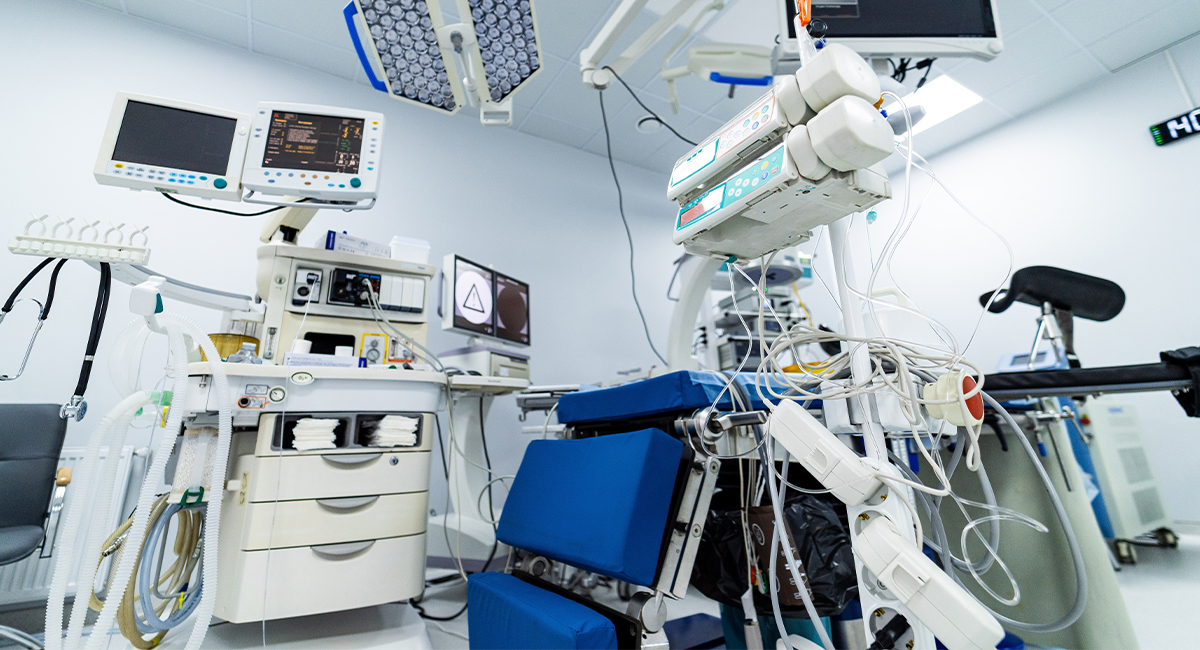
It is important to factor in any infrastructure projects altogether so that these lifecycles can be taken into consideration. Knowing what is becoming regulation and what is only being suggested as a guideline is a very important factor when refurbishing a hospital. By working closely with the clinicians, Estates management and IT teams you can minimise complications in the future. A simple Theatre refurbishment includes power outputs, network connections and medical gases. Knowing where the items need to be situated and knowing their lifecycle and maintenance is crucial. The HTM is vital in this situation. The Health Technical Memorandum enhances safety and upkeeping and building of new healthcare settings such as hospitals. Knowing where to situate aspects mentioned above can bring valuable efficiencies and contribute against damage or downtime through scheduled maintenance. Ergonomics is a crucial factor in operating theatres and knowing what type of devices that are coming is key to future proofing. Surgical robots, diagnostics are all getting better but can often make a small theatre even smaller in minutes. Knowing where to situate and how many sockets are vital for meeting the needs of safety and modernisation while upholding crucial sterile areas.
New Technology, New Challenges
It is very easy to be told that something new and digital will solve old problems, but they often bring new problems. Biomedical engineers will often see the bigger picture from not only the functionality of the device, but also how it can deliver results for patient care and modernisation of patient care or maybe being utilised within a larger system.
You would be very surprised at what we see in a medical device compared with your own R&D team.
A Call to Manufacturers and Healthcare Teams
What I would say to manufacturers is to please come and visit the hospital Biomedical engineering department and ask us what is working well and what is causing problems. You would be very surprised at what we see in a medical device compared with your own R&D team. A Biomed engineer only wants to see things working as they have been designed to work rather than spend time fixing them. We want to extract the full potential of the device at 100% of the time to deliver safe and modern patient care. But I would also encourage Hospital teams to engage with their BioMed teams as much as possible. I would also encourage BioMed’s to go out and visit and engage with the clinical teams and users.
The Future of Connected Healthcare
We are very lucky to have some excellent Medical Device manufacturers and suppliers big and small within the UK. They played a huge part in the Covid pandemic and provided some excellent support to us through brilliant communication and supplies. There are also some very good independent training facilities providing an ever-increasing range of Biomed related courses. The UK has a very close Biomed network who will often know each other either through working in different hospitals or even attending training or one of several conferences now dedicated to Biomedical engineering. These conferences are getting bigger by the year as our skills and importance are becoming recognised, but also because of the innovations coming into the healthcare sector.
Digital healthcare is now here, and it will hopefully bring safer care to patients either in or outside of a hospital environment. But it will be the medical devices that connect to the electronic records which clinicians will view to help diagnose and treat a patient. Without the devices there is limited diagnosis and limited treatment. Without your biomedical engineers supporting these devices you have a lot of systems in place doing nothing.
Managing Complexity in Modern Healthcare
BioMed’s across the world are making a real difference to patient care and outcomes. They are providing solutions and extracting all the capabilities of every medical device to ensure value for money and to provide better care. BioMed’s will often be updating their skills and training every year to keep up with technology but also regulations. I would always recommend that BioMed’s spend some time in the areas they provide services and to meet the staff and find out the nature of their services and why a device is crucial for those services. A biomed can be trained in how to service or maintain an anaesthetic machine, but understanding the clinical side of its use will benefit the engineer and users over time. I have been lucky enough to have worked in healthcare for 30 years including surgical and emergency care which gave me experience as a device user and how they are used. Now I understand and can appreciate why a device maybe so important to a patients care.
Time spent with users will also improve your replacement programs knowing what your users want to achieve in the future. What healthcare needs for the future is solutions and not necessarily stand-alone devices but more joined up systems whereby data can be extracted to coincide with other diagnostics. I would also encourage Hospital teams, clinicians but also manufacturers to engage more with their Biomed teams as much as possible as a Biomed will often deliver solutions. We are not just engineers and technicians who fix devices when they break, we can also provide support to prevent a device from breaking through training and better understanding of why the device is needed.
Our role is changing and evolving along with the digital information trend. Just as much as clinical staff need to update their skills joining this trend so do BioMed’s. It is an interesting time in our industry and for medical device manufacturers. But I look forward to delivering further solutions, better patient care and remoulding what future healthcare will look like.
Disclaimer. The views and opinions expressed in this article are solely those of the author and do not necessarily reflect the official policy or position of Test Labs Limited. The content provided is for informational purposes only and is not intended to constitute legal or professional advice. Test Labs assumes no responsibility for any errors or omissions in the content of this article, nor for any actions taken in reliance thereon.
Get It Done, With Certainty.
Contact us about your testing requirements, we aim to respond the same day.
Get resources & industry updates direct to your inbox
We’ll email you 1-2 times a week at the maximum and never share your information