BS EN 17272 Testing: What Hydrogen Peroxide Robot Certification Really Means

Article Summary
BS EN 17272 testing provides a framework for evaluating hydrogen peroxide disinfection systems, but the evidence and claims it supports depend on factors such as chamber volume, cycle parameters, formulation and organism selection.Article Contents
Introduction
BS EN 17272 is often treated as a simple pass-or-fail standard: a device is either “EN 17272 compliant” or it is not. From our experience designing and running a considerable number of these studies on both hydrogen peroxide devices and the disinfectant formulations used within them, this is an oversimplification.
The standard provides a methodology rather than a fixed specification, and what a certificate can legitimately support depends on decisions made before testing begins. Chamber volume, organism selection, cycle parameters and formulation all influence the scope of the claims that can be made.
This article explains what we discuss with clients before a study is scoped, where misunderstandings most commonly arise, and what BS EN 17272 does – and was never intended to – demonstrate.
What BS EN 17272 Actually Tests
As discussed in our previous article on BS EN 17272, the standard consists of two core components.
The Efficacy Test places inoculated carriers at a fixed distance from the device and measures the log reduction achieved.
The Distribution Test positions eight carriers at specified heights in the corners of the chamber, inoculated with S. aureus, to confirm that the disinfectant reaches all areas of the room rather than only those closest to the source.
It is important to recognise that this methodology is not limited to devices. We are frequently asked to test complete systems – a device paired with a specific disinfectant formulation – as well as formulations on their own, either against a client’s validated device or a reference device we hold for that purpose.
Although the considerations differ slightly depending on whether the device, the formulation or both are being assessed, the underlying principle remains the same: the value of any result depends on precisely what was tested.
Both tests are performed in an empty chamber under controlled conditions of 20 ± 1°C and 50–70% relative humidity. This provides a rigorous and repeatable way of assessing the performance of the disinfection process itself.
However, the standard deliberately allows flexibility. Chamber volume, organism selection and cycle parameters are all agreed during study design. As a result, two systems can both be tested in accordance with BS EN 17272 yet support very different performance claims because the studies were designed differently.

Two Questions That Define Every BS EN 17272 Study
Before discussing the technical details of any BS EN 17272 testing programme, we begin with two straightforward questions:
- Why is the testing being carried out?
- What exactly is being tested: the device, the formulation, or both?
The first question provides important context. Whether the work supports a product launch, a tender submission or substantiates an existing claim influences project planning, timelines and the flexibility available when designing the study.
The second question is what defines the technical scope.
Once we understand what is being submitted for testing, its intended market and how it will be used, we can identify the most appropriate study parameters and highlight potential limitations before testing begins. This also allows us to assess whether the proposed testing is aligned with the claims the client ultimately wants to make.
This is an important distinction because it sits outside the scope of the standard itself. BS EN 17272 explains how a system should be tested. It does not determine whether that system is well suited to its intended application.
That judgement comes from practical experience of testing a wide range of hydrogen peroxide devices and formulations, understanding where limitations commonly arise and recognising potential issues before a study is commissioned. Raising those questions at the planning stage is considerably more valuable than discovering them after a report has been issued.
Why Chamber Volume Matters in BS EN 17272 Testing
In our experience, clients usually have a clear understanding of the room volume, or range of volumes, they need to validate. This is typically determined by where the device will be used, whether that’s a treatment room, vehicle interior or production space.
What is less widely understood is that BS EN 17272 does not specify a default chamber volume, nor should one be assumed.
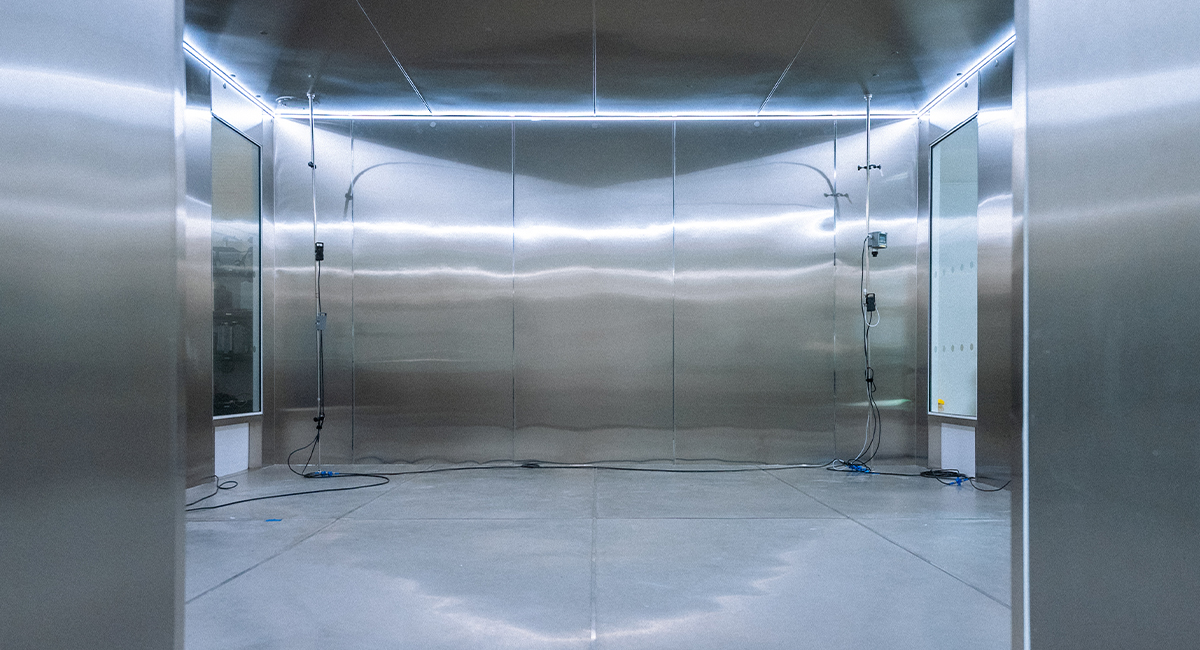
The chamber volume selected for testing should reflect every environment the device is intended to support. If a device is validated in a 65 m³ chamber because that was appropriate for an initial project, the resulting certificate cannot automatically be extended to larger environments, such as hospital wards or operating theatres.
This is because both disinfectant distribution and contact time change with room size. A successful distribution test at one volume should not be interpreted as evidence that the same performance will be achieved in a significantly larger space. Equally, we have undertaken projects that required much smaller chambers to accurately reflect the intended application.
Understanding how a client intends to deploy a device allows us to identify potential limitations before testing begins. If the intended marketing claims extend beyond what the device can realistically achieve, it is far better to discuss this during study design than after testing has been completed.
Output and distribution capability do not scale indefinitely with room size. A device that performs well in one environment may require additional testing, or may simply not be appropriate, for substantially larger spaces.
For this reason, an important part of the initial discussion is confirming the full range of environments the client intends to market the device for. In some cases, this results in testing across multiple chamber volumes so that the evidence genuinely supports the claims being made.
Why Cycle Parameters Must Match Real-World Use
Another common area of misunderstanding concerns cycle parameters, particularly contact time and diffusion time, and whether the validated cycle reflects how the device will actually be used once it reaches the market.
This is an area where our experience often proves valuable. Engineering teams may not always be familiar with the terminology used within the standard or appreciate how closely the validated cycle should reflect the final commercial product.
One issue we encounter is where a device is tested using a longer or more conservative cycle than the one ultimately supplied to customers. Somewhere between validation and production, the tested cycle and the shipped cycle drift apart.
While this may appear to be a minor difference, it can significantly affect how meaningful the validation data is.
For that reason, we establish the device’s intended operating parameters before testing begins. If the proposed test cycle differs from the cycle that will be used in practice, we raise this with the client at the outset.
Validation data is most valuable when it reflects real-world use rather than an optimised test scenario.
Commercial pressures can also influence study design. For example, where a product launch or tender deadline is approaching, there may be a temptation to validate whichever cycle is available at the time rather than the one intended for release. Identifying this early helps avoid situations where the validated performance no longer reflects the finished product.
The intended environment is equally important. A short, energy-efficient cycle that performs well in a small consulting room may not provide equivalent performance in a larger space with greater airflow and surface area.
These are not questions that BS EN 17272 is designed to answer. The standard defines how testing should be conducted, but determining whether a particular cycle is appropriate for the intended application relies on practical experience and careful study design.
Testing Hydrogen Peroxide Formulations Under BS EN 17272
Although discussions around BS EN 17272 often focus on devices, we also carry out studies on the disinfectant formulations themselves.
This may involve a client reformulating an existing validated product and wanting to demonstrate equivalent performance, or developing a new formulation intended to be compatible with several devices already on the market. In other cases, a device manufacturer may wish to compare multiple candidate formulations before selecting one for commercial use.
Regardless of the scenario, the same principle applies: the result is only meaningful for what was actually tested.
A formulation validated at a specific concentration, with a defined active ingredient and batch, should not be assumed to perform identically if any of those variables change. Likewise, a device validated with one formulation cannot automatically be assumed to deliver the same performance when paired with another.
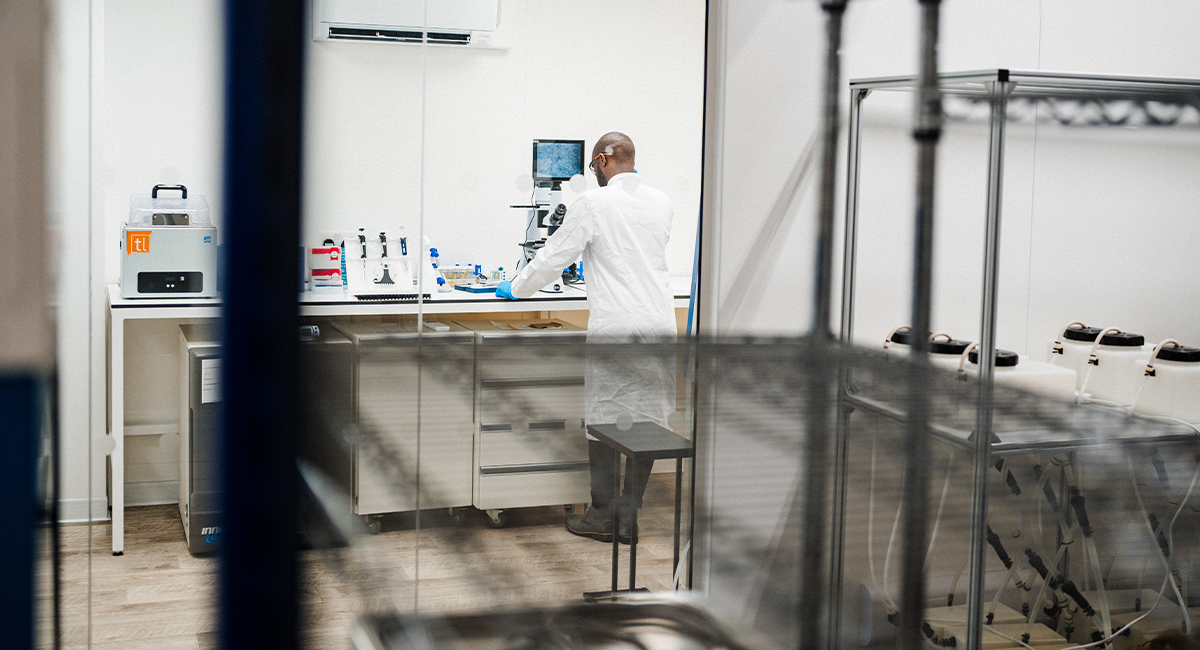
For this reason, we record formulation details (including active ingredient concentration, batch number and supplier) with the same level of scrutiny applied to a device’s operating parameters.
Matching Organism Testing to Performance Claims
BS EN 17272 groups organisms into broad efficacy categories, including bactericidal, sporicidal, virucidal, and yeasticidal/fungicidal.
A system may successfully meet the requirements for one category without ever being tested against another. Although this may seem obvious, it remains one of the most common causes of overly broad marketing claims.
For example, demonstrating bactericidal efficacy does not support a sporicidal claim unless sporicidal testing has also been completed.
To avoid this, we agree the intended efficacy claims during study design so the appropriate organism panel is selected from the outset. This helps ensure the resulting data supports the claims a client intends to make.
What BS EN 17272 Does Not Test
Beyond chamber volume, cycle parameters and organism selection, there are several aspects of performance that BS EN 17272 was never intended to assess.
It does not evaluate:
- Performance in furnished or irregularly shaped rooms, as testing is carried out in an empty chamber.
- Material or equipment compatibility following repeated exposure.
- The time required for hydrogen peroxide concentrations to return to safe re-entry levels.
- Operator or occupant safety monitoring, which is covered by separate guidance.
None of these limitations represent a weakness in the standard. BS EN 17272 has a clearly defined purpose and fulfils it rigorously.
The important point is that its purpose is narrower than simply proving a device “works”. Understanding where the standard ends helps ensure that certification is interpreted appropriately and that additional testing is considered where necessary.
Before You Commission BS EN 17272 Testing
Based on our experience, there are several pieces of information that help shape a meaningful study from the outset:
- The range of room sizes the device is intended to support, even if only approximate.
- The operating cycle that will be used in practice, rather than one configured solely for testing.
- Where a formulation is involved, details of the active ingredient concentration, batch and supplier, together with whether it will be tested independently or alongside a specific device.
- A clear understanding of the efficacy claims the testing is intended to support, so the correct organism panel can be selected.
- An openness to discussing the study scope, as the most appropriate testing programme is not always the one initially requested.
Providing this information early helps ensure the study is designed around the claims a client ultimately wants to make, rather than simply generating a certificate.
Endnote
BS EN 17272 provides a robust and repeatable framework for evaluating hydrogen peroxide room disinfection systems. However, it should be viewed as a testing methodology rather than a universal pass-or-fail certification.
The value of any result depends on the study that was designed, including the chamber volume, operating cycle, organism panel and formulation that were tested. Two studies conducted to the same standard can legitimately support very different claims because the testing objectives were different.
Understanding these considerations before a study begins helps avoid unnecessary retesting, ensures certification reflects real-world use and provides evidence that genuinely supports a product’s intended claims.
We are always happy to discuss study design before a test plan is finalised. In our experience, these early conversations save time, reduce the risk of unexpected limitations and help ensure that the resulting data demonstrates exactly what it needs to.
Get It Done, With Certainty.
Contact us about your testing requirements, we aim to respond the same day.
Get resources & industry updates direct to your inbox
We’ll email you 1-2 times a week at the maximum and never share your information