Small Design Decisions. Big Manufacturing Consequences

Article Summary
Small design decisions in CAD, tolerances, drawings and assembly can create avoidable manufacturing problems if their wider impact is not considered.Article Contents
Why Significant Manufacturing Problems Can Begin With the Smallest Design Choices
The problem was a radius.
It had been carried over from an earlier version of a component and, looked at on its own, there was nothing obviously wrong with it. The CAD looked fine. The drawing looked fine. The part could be manufactured exactly as specified.
So it was.
The issue only became obvious when the physical part was fitted.
The component was a test piece rather than a critical production part, so the consequence was manageable. The radius meant it did not fit the surrounding assembly as intended, and a small bracket was made so the setup could still be used.
Nothing failed catastrophically. The project did not stop. The part itself had been manufactured correctly.
But the experience was useful precisely because the problem was so ordinary.
The radius had simply carried over from an earlier version while the rest of the design moved on around it. On the drawing, there was little to suggest anything was wrong. It was only when the design became physical that the interference became obvious.
That is something I have become increasingly aware of in engineering: many manufacturing problems do not begin on the shop floor.
They begin much earlier, often in CAD, and often with decisions small enough not to attract much attention.
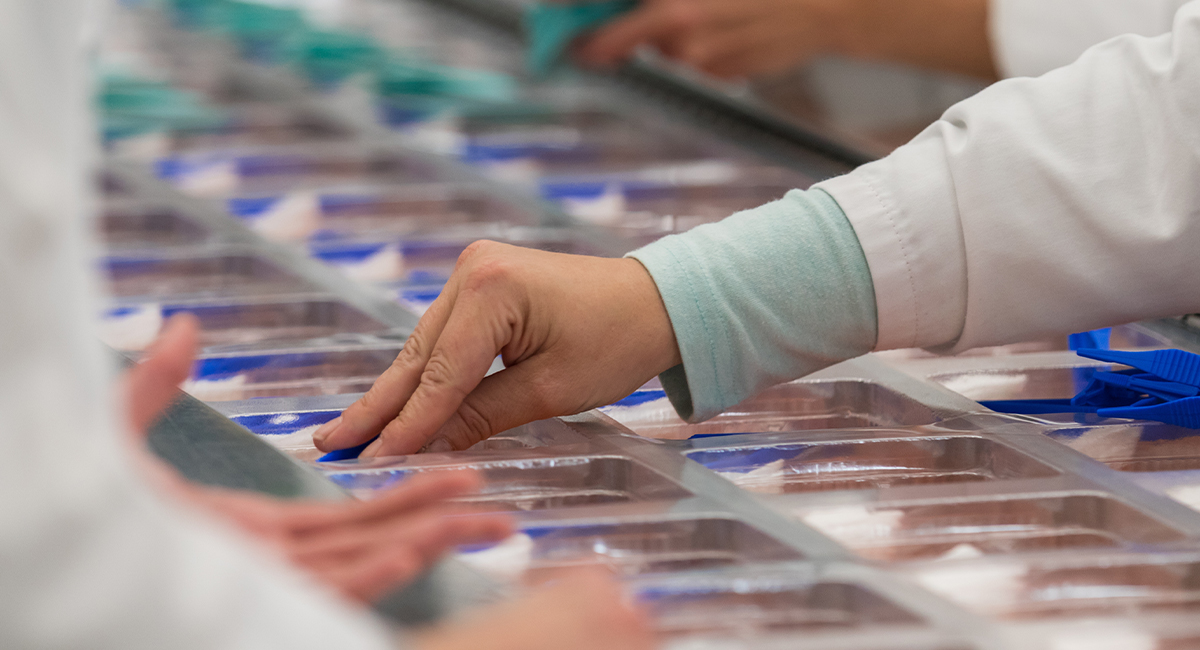
How Small Design Changes Affect Manufacturing
Mechanical design is full of small decisions.
A hole moves. A plate becomes thicker. A radius changes. A fastener is replaced. A sensor is shifted by a few millimetres. A tolerance is tightened.
Most of those changes feel local when they are made.
The assembly does not see them that way.
Move a hole and the mating component may also need to change. Increase a plate thickness and fastener engagement may be affected. Shift a sensor and suddenly cable routing, adjustment range or access is different. Change an edge profile and a clearance that once existed may disappear.
The radius issue was a good example of that.
Nothing about the radius itself was difficult to manufacture. The problem was that the surrounding design had moved on while that feature had effectively stayed where it was.
That is where seemingly minor changes can become expensive.
The change itself may take seconds. Understanding what it affects is the engineering work.
Why Manufacturing Tolerances Matter
One of the easiest ways to make a drawing look more precise is to make the tolerances tighter.
That does not necessarily make the design better.
Every tolerance has a manufacturing consequence. A tighter requirement can mean more machining time, more inspection, more rejected parts and more difficulty for the supplier. If the dimension genuinely controls function, that may be entirely justified.
If it does not, the additional precision may add cost without adding value.
The opposite problem is just as important. A tolerance that is too loose at a critical interface can create variation that only becomes visible when several parts come together.
A design can therefore look completely satisfactory at nominal dimensions and still be unreliable in manufacture.
I find it useful to think less about how accurately a part can be made and more about how accurately it needs to be made.
That sounds like a small distinction, but it changes the question.
Instead of asking “Can the supplier hold this tolerance?”, the designer starts asking “What happens to the assembly when this dimension is at either end of its tolerance?”
That is a much more useful question.
A robust design should continue to function across the intended tolerance range, rather than relying on every component being close to its nominal dimension.
CAD Design vs Real-World Assembly
CAD also makes access look easier than it really is.
A designer can rotate an assembly, hide components, create section views and inspect a fastener from any direction.
The person assembling it has none of those advantages.
They have the physical product, a tool and whatever access the design has left them.
A screw may be clearly visible in the model but awkward to reach with a driver. A nut may need to be held from a side that becomes enclosed earlier in the build. A component may fit perfectly once installed but be difficult to get into position in the first place.
These are not dramatic design failures. In many cases, the product can still be assembled.
The problem is that the difficulty has simply been passed downstream.
That matters because assembly effort is part of the design whether or not it appears on the drawing.
An awkward operation that seems acceptable during a prototype build can become a genuine manufacturing problem when repeated tens, hundreds or thousands of times.
A few extra seconds per unit become labour. Awkward access becomes variation. A clever workaround becomes something that has to be taught.
The best time to remove those problems is before they become normal.
Designing for Easier Manufacturing and Assembly
Engineers are very good at assembling their own designs. This creates another trap during prototyping.
The engineer who designed the assembly already knows how it is meant to go together.
They know which part goes in first. They know where the difficult clearance is. They know that one component needs to be tilted slightly before it drops into place. If something is awkward, they already know the workaround.
That knowledge can make a difficult assembly look easier than it is.
A successful prototype therefore does not automatically prove that the design is ready for manufacture.
The better question is whether somebody without that background knowledge could assemble it correctly and consistently.
Does the geometry help locate the parts?
Can similar components be fitted incorrectly?
Is the assembly order obvious?
Can the important features be inspected?
Does the product itself guide the person building it, or does it rely on explanation?
If an engineer has to stand beside an operator and explain the trick to assembling something, that is worth paying attention to.
Sometimes the answer is training. Sometimes the better answer is changing the design.

Why Engineering Drawings Matter in Manufacturing
Engineering drawings can sometimes be treated as the final administrative step after the “real” design work has been completed.
In practice, they are part of the design itself.
At some point, the person who created the CAD model will no longer be the person making the component.
The supplier may never see the development history. They may not understand which dimensions are particularly important to the function of the assembly. They do not have the context that exists in the designer’s head.
They have the information that has been released to them.
That means a drawing can be technically complete and still communicate poorly.
A critical relationship may be hidden among less important dimensions. An orientation may be obvious to the designer but unclear to somebody seeing the part for the first time. A revision may change the geometry without making the effect obvious elsewhere.
One of the simplest drawing checks is also one of the most useful:
If the designer was unavailable, could somebody still manufacture the part correctly?
If the answer is no, some of the design intent has not yet made it onto the drawing.
Using Design Reviews to Identify Manufacturing Problems
Most design reviews naturally focus on whether something meets its requirements.
Will it fit?
Will it withstand the load?
Does it interfere?
Does it perform the intended function?
Those questions are essential, but they do not always expose the smaller issues that create manufacturing difficulty.
There is value in asking more ordinary questions too.
What is difficult to reach?
What is easy to fit incorrectly?
What takes longer than it should?
What would be awkward to inspect?
Where is adjustment being used to compensate for variation?
What would become frustrating after assembling fifty units rather than one?
These questions may sound less technical, but the answers often point directly towards cost, repeatability and quality.
Inconvenience can be useful engineering information.
Preventing Manufacturing Problems Through Better Design
Not every engineering improvement requires a sophisticated solution.
Sometimes the right answer is moving a hole.
Increasing a clearance.
Changing the direction of a fastener.
Relaxing a tolerance that never needed to be tight.
Adding a locating feature.
Updating a drawing properly.
None of these changes looks impressive in isolation, and most will never be noticed by the eventual user.
That is often a sign that they have done their job.
A well-designed assembly can feel uneventful. Parts fit where they are supposed to. Tools have access. Variation has been considered. Drawings answer questions before somebody has to ask them. Manufacturing does not need to invent a workaround for something that could have been solved during design.
There is a lot of engineering hidden inside that simplicity.
The radius that caused the original interference was easy to work around. What made it valuable was how ordinary it was.
Because that is where many manufacturing consequences begin.
Not with dramatic failures, but with reasonable decisions whose wider effects were not followed far enough.
A radius.
A hole.
A tolerance.
A fastener.
A few millimetres.
Small decisions are unavoidable. The important part is recognising when they are no longer small.
Disclaimer. The views and opinions expressed in this article are solely those of the author and do not necessarily reflect the official policy or position of Test Labs Limited. The content provided is for informational purposes only and is not intended to constitute legal or professional advice. Test Labs assumes no responsibility for any errors or omissions in the content of this article, nor for any actions taken in reliance thereon.
Get It Done, With Certainty.
Contact us about your testing requirements, we aim to respond the same day.
Get resources & industry updates direct to your inbox
We’ll email you 1-2 times a week at the maximum and never share your information