UV Disinfection: Everything You Need to Know About BS 8628

Article Summary
BS 8628:2022 establishes a standardised method for testing and validating the performance of automated UV surface disinfection systems. It enables consistent, science-based comparison of UV technologies across healthcare, pharmaceutical, and other high-risk environments.Article Contents
Introduction
In recent years, Ultraviolet (UV) disinfection has moved rapidly from niche technology to mainstream infection-control strategy. Over the last decade, hospitals, pharmaceutical facilities, and food-processing plants have adopted automated UV systems to supplement traditional cleaning and chemical disinfection. But until recently, the industry lacked a common benchmark for testing whether those claims truly hold up.
That changed with the publication of BS 8628:2022, a long-awaited standard that finally defines how to measure and report the performance of automated UV surface disinfection systems.
Why BS 8628 Matters
Published by the British Standards Institution (BSI) in March 2022, BS 8628 provides a rigorous, quantitative test method for assessing automated UV disinfection by direct illumination.
The standard covers multiple classes of microorganisms (including bacteria, spores, yeasts, fungi, mycobacteria, viruses, and bacteriophages) and specifies exactly how to demonstrate a measurable log-reduction in microbial contamination.
For those of us involved in environmental hygiene or validation, this is a significant step forward. It moves the discussion from “does UV work?” to “how well does this system perform, under defined conditions, against specific organisms?”
In simple terms, it sets out how to prove that a UV device effectively kills microorganisms and particularly how to do so in a repeatable, scientifically robust way.
How UV Surface Disinfection Testing Works Under BS 8628
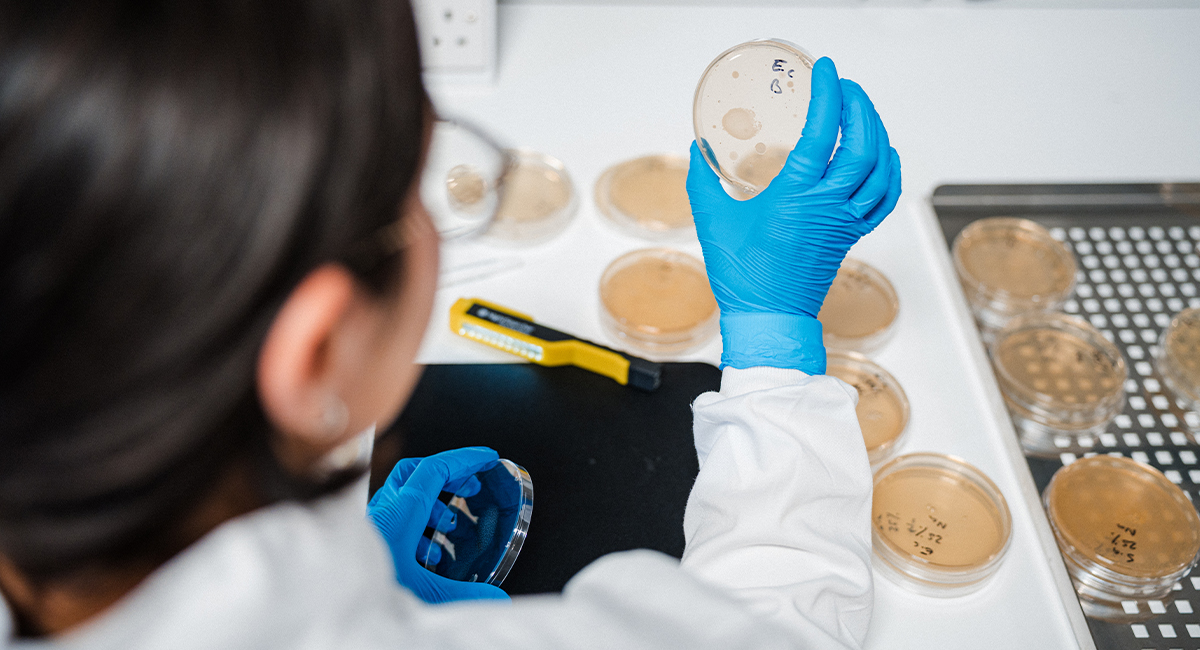
The standard outlines a quantitative test method using surfaces (called carriers) inoculated with known concentrations of test microorganisms. The carriers are placed at defined positions and distances from the UV emitter, ensuring direct line-of-sight exposure. After treatment, the surviving microorganisms are quantified, and results are expressed as log-reductions compared to untreated controls. All the information about the setup and how to analyse the data is included in the Standard.
The test always includes carriers, positive controls and further controls for the interfering substance, which is a solution added to the test microorganisms that simulates real‑world soiling and reduces the effectiveness of UV‑C light, making the test more realistic and which changes according to the sector the system is tested for. A rangefinder study may be completed before the main and inclusive final test. Firstly, we do a certain number of cycles to confirm the most appropriate variables using the most challenging organism and then, once happy with the results, we proceed with the main test. Depending on which organisms are included, the device can claim bactericidal, sporicidal, virucidal, or other forms of activity.
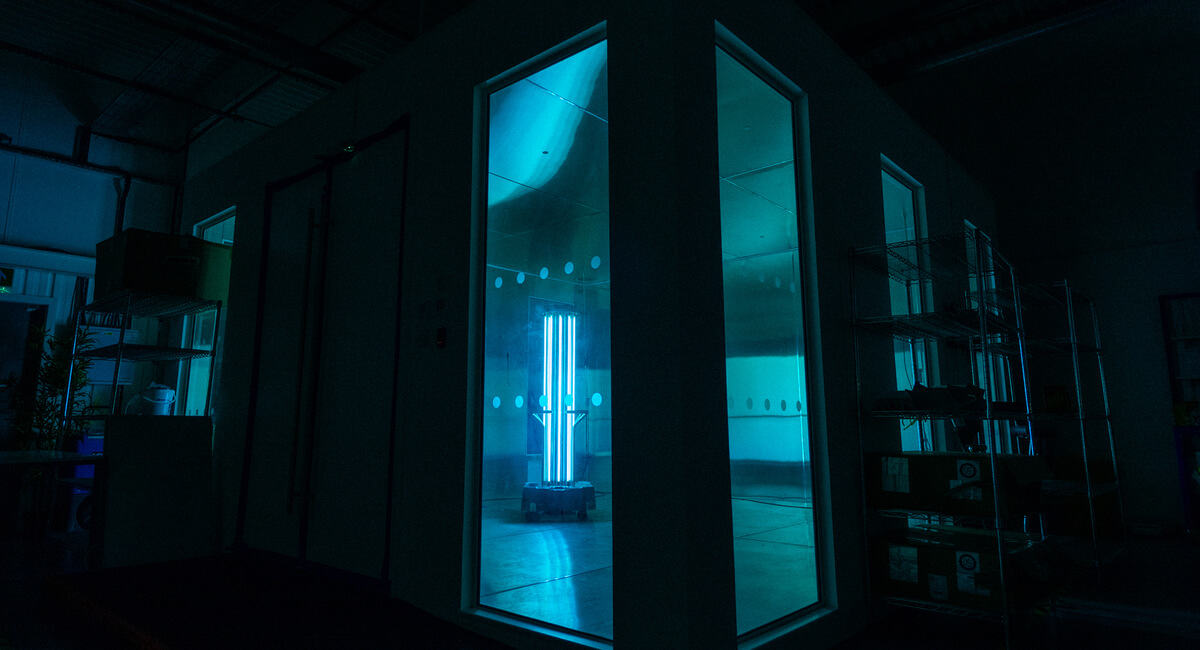
Importantly, BS 8628 focuses on direct illumination only. Shadowed areas or indirect exposure are outside its defined scope, a reminder that UV effectiveness always depends on geometry and distance.
Where BS 8628 Applies
BS 8628 is relevant to sectors where hygiene and infection prevention are critical:
- Healthcare and laboratories: automated room or equipment disinfection
- Food and beverage production: contamination control in processing environments
- Pharmaceutical and cleanroom facilities: surface hygiene assurance
- Public spaces and transport: where automated UV systems are used for surface treatment
It applies to automated UV systems, not handheld devices, and is not designed for air or water disinfection (which are covered by other standards).
What Affects UV Results
Having worked with UV systems in controlled environments, I’ve seen firsthand how sensitive performance can be to physical variables. BS 8628 highlights several critical factors that users and manufacturers must consider:
- Distance: UV intensity drops sharply with increasing distance from the emitter. Even small variations can affect microbial reduction. This variable depends on the size of the enclosure.
- Line of sight: Shadowing or obstruction can create untreated areas; reflective surfaces can mitigate this as well.
- Exposure time: Adequate dwell time is essential to achieve target log-reductions.
- Surface condition: Clean, dry, and smooth surfaces respond far better than soiled or porous ones.
By understanding these parameters, professionals can interpret BS 8628 test data realistically and design cleaning protocols that maximise UV effectiveness.
Benefits of BS 8628
As someone who has evaluated a range of automated disinfection technologies, I view BS 8628 as a turning point for the UV sector. For years, performance claims were difficult to verify or compare. Now, we have a credible, science-based framework that benefits everyone:
- Manufacturers gain a clear validation pathway.
- Testing laboratories can apply a uniform methodology.
- End users gain confidence and transparency.
- Regulators and specifiers can reference a recognised benchmark.
In essence, BS 8628 transforms UV disinfection from a promising innovation into a measurable, standardised technology that can stand alongside chemical disinfection methods in compliance documentation and quality assurance programmes.
Expert Perspective
The introduction of BS 8628 marks an important milestone in the standardisation of non-chemical disinfection technologies. It gives the UV-disinfection industry a solid, science-based foundation for performance validation, and it helps ensure that professionals can have greater confidence in what these systems truly deliver.
In my experience, adopting BS 8628-aligned testing and verification brings several operational advantages:
- It helps distinguish between systems that deliver real, quantifiable germicidal performance and those that rely on marketing claims.
- It supports risk-based decision-making for environmental disinfection.
- It fosters collaboration between suppliers, microbiologists, and end-users through a common technical language.
Ultimately, the standard doesn’t just validate UV systems, it validates how we use and trust UV as part of modern hygiene strategies. We had many examples of items tested in our laboratory and every small detail can lead to big changes in the results. For example, the direction of the bulbs is something to keep in mind or the number of lights, since they play a crucial role in killing the microorganisms.
Key Takeaway
BS 8628:2022 is more than a testing protocol. By defining how automated UV surface disinfection should be measured, it enables fair comparison, credible validation, and responsible deployment of UV technology in critical environments.
As the adoption of non-chemical disinfection continues to grow, this standard will help ensure that decisions are driven by data, not assumptions, and that UV disinfection earns its place as a reliable component of integrated infection-control practice.
Considering UV Disinfection Validation?
Our team supports manufacturers and end users with independent UV-C efficacy testing aligned to BS 8628.
Get It Done, With Certainty.
Contact us about your testing requirements, we aim to respond the same day.
Get resources & industry updates direct to your inbox
We’ll email you 1-2 times a week at the maximum and never share your information