Medical Device Sterilisation Validation
We independently validate the sterilisation instructions in your device IFU to generate audit‑ready evidence of effectiveness. Manufacturers are required to provide validated processing instructions when reprocessing is intended; our protocols align to ISO 17664‑1/‑2 for what must be provided in the IFU.
Depending on the market, we reference the applicable standards to shape the study design and acceptance criteria e.g., steam sterilisation in healthcare facilities per AAMI ST79:2017 or ISO 17665:2024, and low‑temperature vaporised hydrogen peroxide sterilisation per ISO 22441:2022.
Frequently Asked Questions
Do we need a separate sterilisation validation if our cleaning is already validated?
Yes. Cleaning and sterilisation are separate process steps; sterilisation must be validated and clearly documented in the IFU, alongside cleaning and (if applicable) disinfection. ISO 17664‑1/‑2 specifies the information manufacturers must provide for processing of reusable devices, which includes validated instructions for sterilisation where intended.
Which standards apply to steam vs. hydrogen‑peroxide sterilisation?
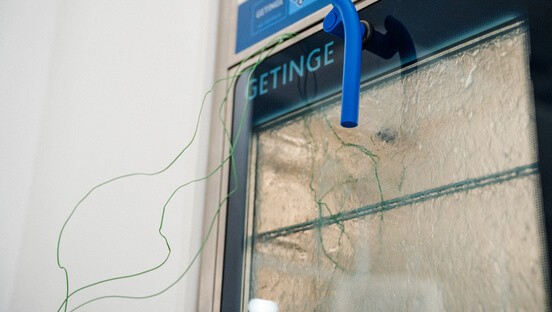
Steam (moist heat) in healthcare facilities: AAMI ST79 (Comprehensive guide to steam sterilisation and sterility assurance), or ISO 17665:2024 is the consolidated international standard for moist‑heat sterilisation requirements.
Vaporised hydrogen peroxide (VH₂O₂): ISO 22441:2022 (development, validation and routine control of VH₂O₂ sterilisation processes).
What will you deliver at the end of sterilisation validation?
An audit ready package: protocol with risk based rationale (cycle selection, load definition, monitoring), raw data and calculations, acceptance criteria and justification, and a final report cross referenced to ISO 17664 for IFU use plus the relevant standards (e.g., AAMI ST79 for steam, ISO 22441 for VH₂O₂).
What if our submission spans multiple regions?
We keep one technical approach (aligned to ISO 17664 for IFU content) and add region specific references as needed, e.g., AAMI ST79 for US healthcare steam sterilisation and ISO 22441 for VH₂O₂, so your file reads cleanly for each reviewer while staying consistent.
How do you select worst‑case devices for testing, what is the “master product” and how is it justified?
We perform a structured worst case justification to identify the master product that poses the greatest challenge to the sterilisation process. This selection may consider factors such as:
- Most complex geometry (lumens, hinges, long channels)
- Material combinations most sensitive to sterilisation stress
- Largest overall mass or highest thermal load
- Densest or most restrictive packaging configuration


We won’t keep you waiting
We respond to all enquiries within minutes of receiving them.
Our lead times match the urgency and demand in the market – we offer industry-leading turnaround times because we know how critical reliable data is for your project. While what you’ve seen is our typical lead time, the final timeline will depend on your specific study requirements. But rest assured, we’ll do everything we can to deliver even faster.
Think of it like a relay race – we’ll hand over the data baton as quickly as possible, so you can keep moving forward on your medical device journey.