Sustainability in Medical Devices: A View from the Mobility Frontline

Article Summary
Sustainability is becoming central to medical device and mobility design as the sector confronts its growing environmental footprint and evolving regulatory expectations. By embedding circular design principles - such as modularity, material efficiency, and recyclability - manufacturers can reduce waste, improve product performance, and lower total cost of ownership without compromising safety.Article Contents
Why is Sustainability Becoming Central to Medical Devices?
At LCS, we’ve been talking a lot about sustainability lately. Something that’s becoming central to how we design, manufacture, and think about mobility products. The medical device sector as a whole is at a crossroad. Our work changes lives. But it also has an environmental cost we can’t ignore.
Healthcare is responsible for about 4.5% of global greenhouse gas emissions. Around a third of that footprint (and most of its waste) comes from medical technology. That’s huge. But it’s also a challenge we can do something about.
For me, sustainability isn’t about jumping on a trend. It’s about building smarter, more resilient products that perform better, last longer, and create less waste along the way. We’ve been integrating circular economy principles into what we do for years, often without even labelling it that way. Modular systems, recyclable materials, and designs that grow with the user – they’re all steps in that direction.
What Does Waste Look Like in the Mobility Sector?
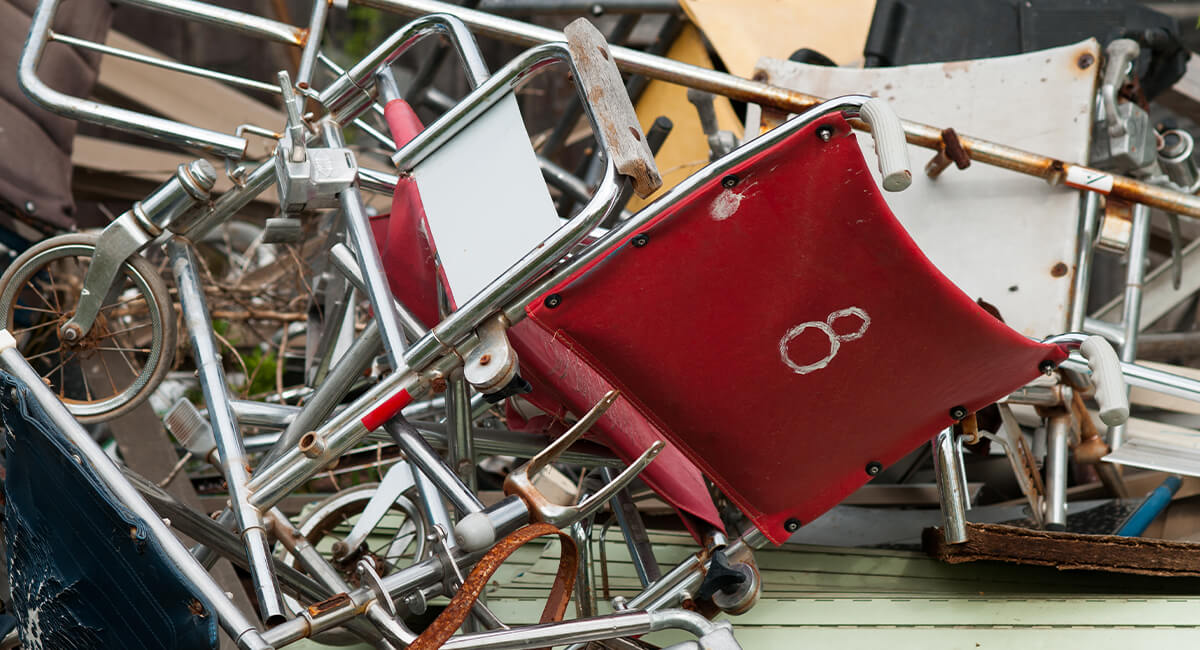
When you work in mobility, waste hits you in the face every day: old seating systems, non-recyclable components, energy-hungry materials. Around 85% of healthcare waste is non-hazardous, but the remaining 15% can’t just be thrown away. Hospitals in high-income countries produce up to half a kilo of hazardous waste per bed, per day.
That’s not sustainable. And with the EU Medical Device Regulation (MDR 2017/745) and new environmental expectations, we’re all being asked to think differently. Not just about safety, but about lifecycle impact.
What Can We Learn from Industry Innovation?
We’re not alone in tackling this. I’ve been really encouraged to see big players leading by example. Take Stryker’s Sustainability Solutions: they’ve reprocessed single-use devices like catheters and scalpels, saving customers $1 billion and diverting 27 million pounds of waste from landfill in just five years.
Or NewGen Surgical in the US: their biobased emesis basins cut CO₂ emissions by 80% compared to traditional products. Swedish firm Mölnlycke has done something similar with its surgical drapes.
Closer to home, our RESHELL modular seating system brings those same ideas into the mobility world. Instead of replacing entire seating systems when a user’s needs change, we can resize, refit, and reuse components. Extending product life and reducing waste dramatically. It’s fully crashworthy (ISO 7176-19) and adjustable across widths of 12–22 inches, depths of 10–26 inches, and heights of 12–26 inches.
Another example is the WheelAir Cushion, which shows exactly what happens when sustainability and user experience go hand in hand. Instead of relying on traditional foam, which is bulky, hard to recycle, and prone to degrading over time, we use a 3D-printed lattice structure made mostly of air. That means up to 70% less material used and a design that’s fully recyclable, lighter, and far more breathable.
For users, the difference is immediate: better temperature control, reduced moisture build-up, and lasting comfort over long periods of sitting. For clinicians and carers, it’s a product that delivers measurable performance benefits and lasts longer in use. It’s the perfect example of how innovation can make life better for both the user and the planet.
How Can We Make Materials Work Harder?
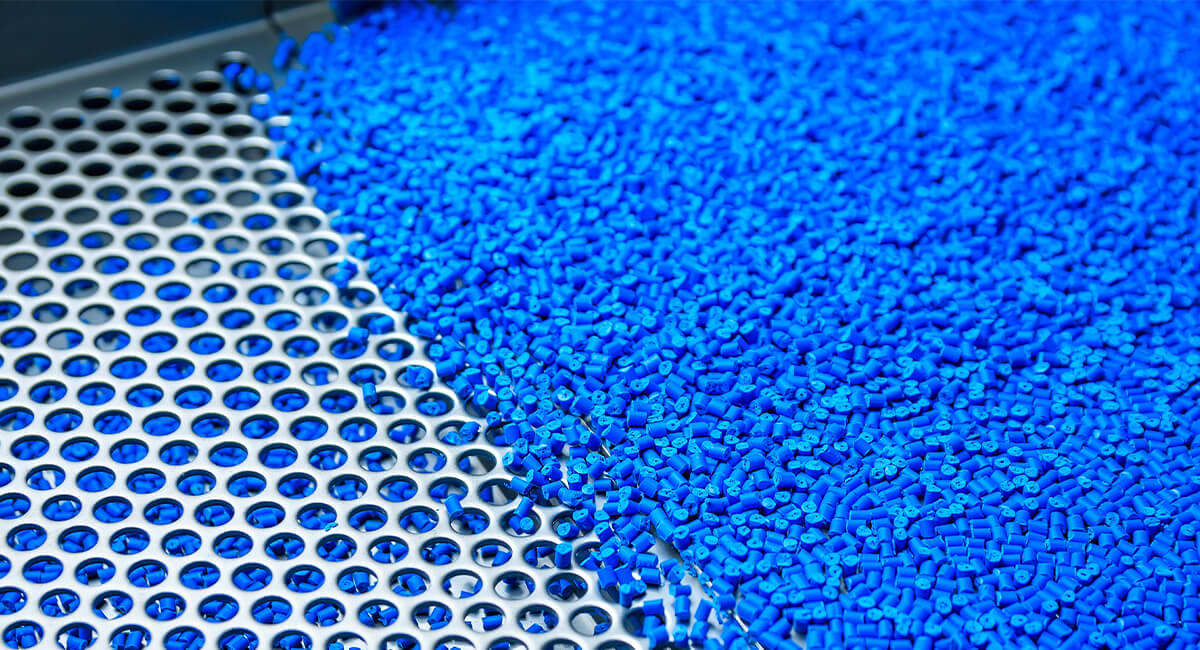
In medical devices, raw materials are one of the biggest sources of emissions. Around 40% of the total, or over 50% in single-use products. So the materials we choose matter.
We’re always exploring recyclable and biobased thermoplastics that perform just as well as traditional materials but can re-enter the production loop. Unlike thermosets, thermoplastics can be remelted and reused, which opens the door to real circularity.
The industry’s moving this way too. Digital material passports, which track polymer grades and additives, are starting to appear, and I think they’ll be crucial for recyclers and regulators alike. It’s all about trust and traceability.
What Does Sustainable Design Look Like in Practice?
When we’re designing a new product, we now ask three questions early on:
- Can it be repaired or reused?
- Can it be disassembled easily?
- Can we validate its performance across multiple lifecycles?
These are design principles that can transform the footprint of a product without compromising safety or quality.
We’ve found that designing for modularity and long-term serviceability doesn’t just make sense environmentally, it also improves clinical outcomes and customer satisfaction. When a chair or cushion fits better and lasts longer, everyone wins.
What Are the Regulatory and Practical Challenges?
Of course, sustainability isn’t without its challenges. Reprocessing remains prohibited in some European countries, including France, Italy, and Austria. And as we all know, any design or material change can trigger new testing cycles, which can be costly and time-consuming.
That’s why we’re focusing on building circularity into new designs from the start. It’s cleaner, simpler, and ultimately more effective.

Do the Economics of Circular Design Add Up?
Circular design often lowers total cost of ownership by improving material efficiency and supply resilience. More than half of MedTech’s emissions could be reduced through circular approaches, and many companies are already reporting cost savings and market advantages.
Procurement is also shifting. Health systems across Europe and the UK are starting to ask for lifecycle data and sustainability metrics in their tenders. That means greener design is quickly becoming a commercial necessity.
Where Do We Go from Here?
No single company can solve this on their own. But we can all play our part. Material suppliers, testing labs, clinicians, and manufacturers like us need to keep pushing the boundaries.
The proof is already there: from reprocessed single-use devices to biobased materials, from modular wheelchair systems to 3D-printed cushions that use 60–70% less material.
At LCS, we’re proud to be part of this movement. Our goal is simple: create products that help people live their lives to the fullest, while respecting the planet we all share. Sustainability in healthcare is the new baseline for innovation.
References
- Boston Consulting Group. (2024). Medtech’s Path to a Circular Future.
- World Health Organization. (2024). Health-care waste. WHO Fact Sheets.
- LCS Ltd. (2025). RESHELL – Modular Interface Shell for custom wheelchair seating.
- LCS Ltd. (2025). WheelAir Cushion – Experience Active Airflow.
Disclaimer. The views and opinions expressed in this article are solely those of the author and do not necessarily reflect the official policy or position of Test Labs Limited. The content provided is for informational purposes only and is not intended to constitute legal or professional advice. Test Labs assumes no responsibility for any errors or omissions in the content of this article, nor for any actions taken in reliance thereon.
Get It Done, With Certainty.
Contact us about your testing requirements, we aim to respond the same day.
Get resources & industry updates direct to your inbox
We’ll email you 1-2 times a week at the maximum and never share your information