The Journey of Medical Devices from Prototype to Patients

Article Summary
The journey from medical device concept to clinical use is a structured, iterative process driven by design control, prototyping, and rigorous verification and validation to ensure safety, performance, and regulatory compliance.Article Contents
Introduction
Have you ever wondered how the medical devices that you see in hospital settings whether a surgical instrument, an implant or a wound care product, made their journey to clinical use? Well to most people, it appears as a finished and reliable solution but in reality, every medical device journey starts from an initial idea and moves through a complex and highly structured development process before it ever reaches a patient.
Behind each product that reaches approval goes through extensive design work, verification testing, detailed documentation and review over months or often years. Engineers, scientists and regulatory teams work together to create an innovative but also safe, effective and reliable device. The transition from prototype to patient use requires strict oversight, as minor design decisions in healthcare can significantly impact safety and outcomes.
This article takes a closer look at the path from prototype to clinical use, exploring the essential development stages and discusses the role of structured design control and verification in ensuring safety and performance.

From Clinical Need to Engineering Concept
Every medical device starts with a problem worth solving. This may arise from a limitation in existing treatments, a safety concern, or a desire to improve patient outcomes. In the development phase identifying the problem clearly is the first and most important step. Without a well-defined need, even the most innovative idea can fail to deliver meaningful impact.
Engineers transform identified gaps into a set of measurable technical requirements to guide development. These requirements define what the medical device must do, how it should perform, and what constraints it must meet. At the early stage, engineers validate early concepts through a combination of manual drafting, fundamental physics calculations, and rudimentary CAD geometry. Feasibility is assessed by asking practical questions: Can this be manufactured? Is it safe? Does it meet user expectations?
Importantly, risk is considered from the beginning. Early identification of potential failure points helps guide safer design decisions and reduces costly changes later in development. This structured approach ensures that innovation is grounded in real-world needs and practical limitations.
Prototyping and Iterative Development
Once a concept has been defined and initial requirements are clear, development moves into the prototyping stage. This is where theoretical ideas are translated into physical models that can be evaluated in practice. Prototyping allows engineers to move beyond assumptions and begin testing how a medical device behaves in real conditions.
Early prototypes are rarely complete or fully refined. By design, they are built to explore key functions and reduce technical uncertainty rather than represent a finished product. Leveraging rapid prototyping methods like 3D printing and small-scale fabrication allows teams to quickly assess form, fit, and mechanical performance. These builds help answer critical questions: Does the mechanism move fluidly? Are forces distributed as modelled? Is the interface intuitive for the user?
Testing at this stage frequently bridges the gap between design intent and physical reality. It is here that engineers might discover a component under unexpected stress or a joint failing to articulate as planned. Identifying these friction points early is invaluable because it prevents costly re-work or safety risks in later development phases.
Consequently, iteration is the heartbeat of medical device design. Each prototype generates empirical data that fuels incremental improvement. Through a structured cycle of building, testing, analysing, and refining, the design matures. This process ensures that every final specification is a decision supported by measurable outcomes.
Verification, Validation, and Structured Testing
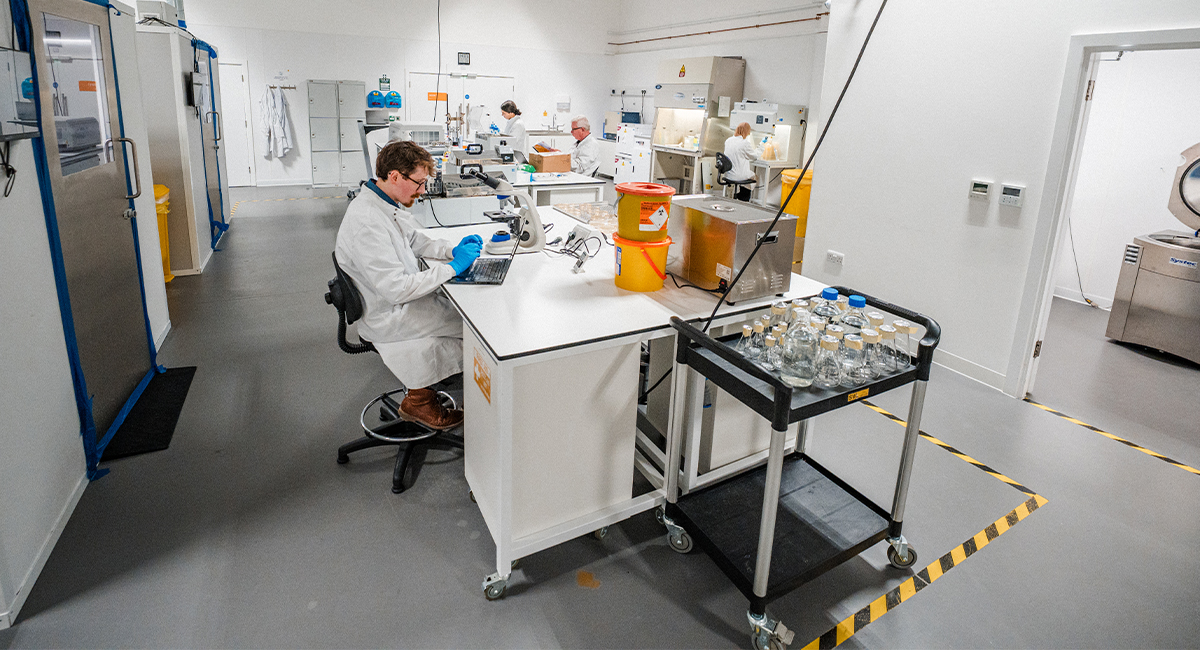
As the design becomes more refined, development moves into a structured testing phase. The focus shifts from exploring ideas to proving that the medical device performs safely and as intended. Testing is governed by defined protocols to ensure that all results are consistent, repeatable, and reliable.
A critical part of this stage is distinguishing between verification and validation. Verification confirms that the design meets its specific technical requirements such as dimensions, material strength, and mechanical function. In contrast, validation ensures that the device meets actual user needs and clinical requirements in real-world conditions.
All testing must be carefully documented because these results form the core evidence required for regulatory approval. If issues are identified, the design is reviewed and improved. This reinforces the importance of iterative development. This rigorous process ensures that by the time a medical device progresses toward the clinic, its performance is supported by clear and structured evidence.
Design Control and Regulatory Oversight
As development progresses, design activities are managed within a structured framework known as design control. This framework ensures that every stage of the process is planned, recorded, and fully traceable. In medical device development, this system is essential to maintain safety, consistency, and professional accountability.
Design control links all stages of development from initial requirements to final testing. It involves managing design changes, documenting every critical decision, and ensuring that risks are identified and mitigated throughout the process. Even minor changes must be reviewed carefully because they can significantly impact device performance or patient safety.
Regulatory oversight builds directly on this structure. Before a device can be used clinically, it must meet strict regulatory requirements supported by clear evidence from testing and documentation. This ensures that the final product is not only innovative but also demonstrably safe for patient use.
Together, design control and regulatory processes provide the structured pathway that allows new medical technologies to move from the laboratory into real-world healthcare settings.
Endnote
The journey from prototype to patient involves far more than initial design. It requires careful development, testing, and review to ensure that a device is safe and reliable for clinical use.
This process shows that successful medical devices are not only built on innovation, but also on structured engineering and evidence-based decisions. Each stage plays a key role in reducing risk and improving performance.
As medical technology continues to evolve, maintaining this approach will remain essential to delivering safe and effective solutions in healthcare.
References
- Hargreaves, J. (2022). A GUIDE TO ISO 13485. [online] Nqa.com. Available at: https://www.nqa.com/en-gb/resources/knowledge-hub/a-guide-to-iso-13485.
- Runnels, C. (2024). ISO 13485: Design and development validation and verification. [online] 13485Academy. Available at: https://advisera.com/13485academy/blog/2019/02/14/design-and-development-validation-and-verification-according-to-iso-13485 [Accessed 29 Mar. 2026].
- Urmconsulting.com. (2022). ISO 13485: Medical Devices-Quality Management System Explained. [online] Available at: https://www.urmconsulting.com/blog/iso-13485-medical-devices-quality-management-system-explained.
- www.meddeviceonline.com. (2023). A Brief Guide To ISO 13485’s Design Controls In Medical Device Development. [online] Available at: https://www.meddeviceonline.com/doc/a-brief-guide-to-iso-s-design-controls-in-medical-device-development-0001.
- www.scilife.io. (2025). Design Verification and Design Validation for Medical device | Scilife. [online] Available at: https://www.scilife.io/blog/design-verification-design-validation.
Disclaimer. The views and opinions expressed in this article are solely those of the author and do not necessarily reflect the official policy or position of Test Labs Limited. The content provided is for informational purposes only and is not intended to constitute legal or professional advice. Test Labs assumes no responsibility for any errors or omissions in the content of this article, nor for any actions taken in reliance thereon.
Get It Done, With Certainty.
Contact us about your testing requirements, we aim to respond the same day.
Get resources & industry updates direct to your inbox
We’ll email you 1-2 times a week at the maximum and never share your information