Particulate Contaminants: Everything You Need to Know

Article Summary
Particulate contamination presents a serious but often overlooked risk to medical device safety, particularly when particles enter the bloodstream. Understanding where particulates originate, how they are extracted and analysed, and which standards define acceptable limits is essential for protecting patients, meeting regulatory expectations, and maintaining product quality.Article Contents
Why Do Particulate Contaminants Matter for Medical Device Safety?
When it comes to assessing the safety and reliability of a medical device, we often focus on the validity and effectiveness of reprocessing instructions:
- How robust is the process in removing residual analytes (e.g. protein) and microbiological contaminants.
- Whether the process causes interactions with the device materials that can leave chemicals and residues on the surfaces.
However, another source of risk when it comes to the safety of a medical device is the particulate contamination of a medical device. Manufacturers need to determine this to ensure there is no risk to patients during clinical use of their device.
What Are Particulate Contaminants in Medical Devices?
Particulate contaminates are foreign minute matter present on a medical device which can cause harm to a patient if introduced into the body. If these contaminants enter the body intravenously, they can cause health issues such as phlebitis, pulmonary dysfunction, infarction, immune system dysfunction, and ultimately could be fatal.
Where Do Particulate Contaminants Come From?
Particulate matter can originate from processes during the manufacturing of the device, including the raw materials and equipment used. When devices are packaged, transported, and stored post manufacturing, particulates can be transferred onto the medical devices and contaminate. When particulates are generated from these sources, they are known as intrinsic particles.
In addition to this, the environment the manufacturing is completed in, including the personnel working at the facility and handling the devices during manufacturing, could also introduce contaminants. These are extrinsic particles and include contaminants from dust in the air and those shed from clothing, skin and hair.
What Are Acceptance Limits for Particulate Contamination?
The challenge for device manufacturers is determining accurate particle counts and setting appropriate acceptance limits for the identified particulates. Acceptance limits would depend on the medical device itself – how is it used, what part of the patient is it in contact with, how long is the exposure etc. – as well as on the properties of the particulate – the size, composition, and potential toxicity. Manufacturers can use guidance from standards and United States Pharmacopeia (USP) test methodologies to help understand what analysis needs to be done to obtain particulate counts and what would be the appropriate acceptance limit for their device.
How is Particulate Contamination Tested in Medical Devices?
The testing of particulate contamination involves three main steps:
- Extraction of Particulates from Medical Devices – this is the process of removing any particulates that could be on the device by using an appropriate liquid. Depending on the set-up the liquid could be pumped/flushed through the device or the entire device immersed into it and then mechanical action (e.g. using an orbital shaker) is applied to agitate the particulates. The extraction media, volume, and method used needs to be representative of clinical use.
- Filtration and Separation of Extracted Particles-this is the process of collecting the extracted particulates using filters ofappropriate pore sizes. Some testing methods do not require this step as the analysis of the particulates is completed on the extracted liquid sample.
- Analysis for Particulate Contamination–once the particulates are collected from the extracted liquid, they need to be counted, and the size of the particles determined. The two main methods of analysing particulates are light obscuration and microscopic, which are detailed below.
Light Obscuration Method for Particle Counting
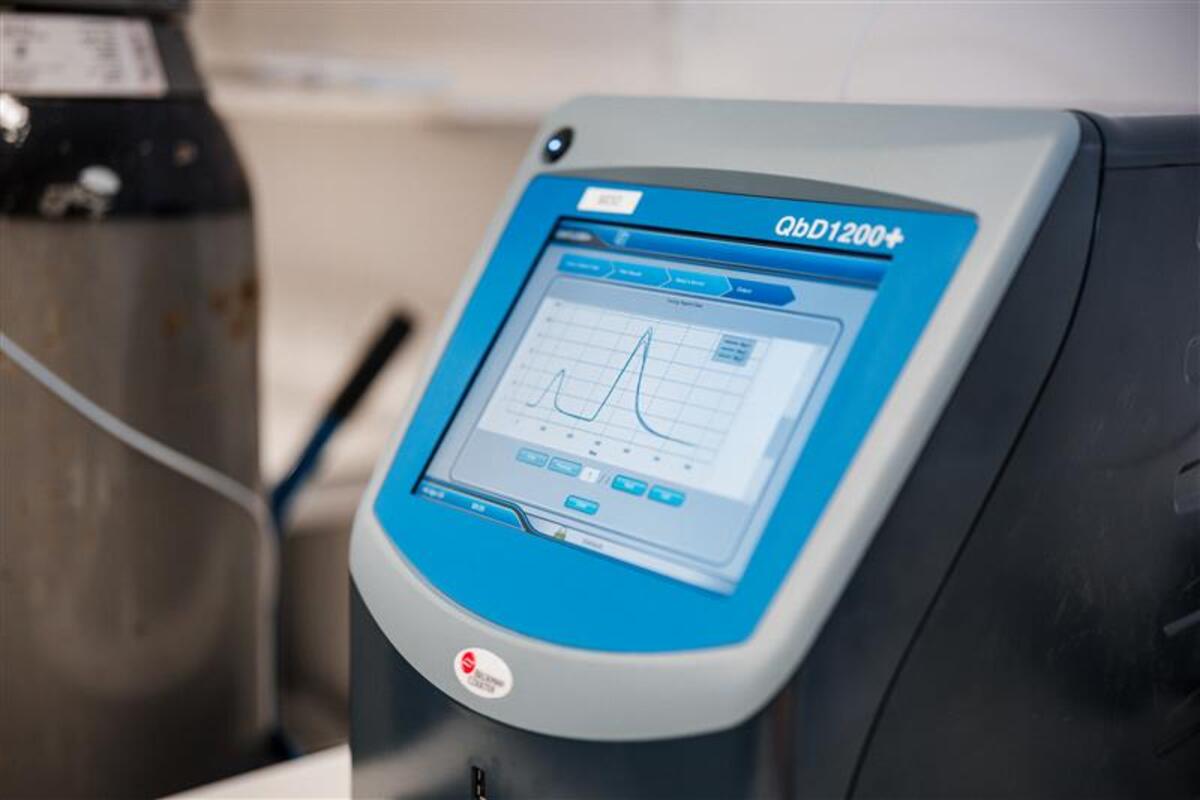
Light obscuration is an automated method that utilises laser diffraction technology in the particle counter. The laser is pointed at the liquid sample extracted and particles present in the liquid cause the light to diffract. A pulse is emitted for each particle, and the amplitude of the pulse corresponds to the size of the particle. This method can be used to detect particles of size as small as 2–10 µm, depending on the specific equipment used.
Microscopic Particle Count Method
For samples that cannot be analysed with light, which could be due to colour of liquid and/or reduced clarity from turbid liquid, the microscopic particle count method can be used. This method involves filtration of extracted liquid through membranes that are ≤ 1.0 µm in size. The filter is dried and then examined under a microscope. The microscopic particle count method has the disadvantage of not being automated, so an analyst must manually count each particle observed. Particles of < 10 µm cannot be as accurately detected in comparison to the light obscuration method.
Preventing Interference in Particulate Testing
When performing particulate testing, it is important that all equipment and extraction media have as little interference with results as possible. Glassware and filters are usually cleaned thoroughly with detergent and rinsed with particle free water. The validity of the preparatory steps is assessed before the equipment can be used for the analysis of contaminants on medical devices.
Which Standards Apply to Particulate Testing for Medical Devices?
Standards exist for manufacturers of medical devices to provide guidance on the methods and acceptance limits. However, many are device specific. Some examples of standards commonly used for particulate testing are below.
AAMI TIR42 – Particulate Testing for Vascular Devices
AAMI TIR42 is specifically for vascular devices, and provides guidance on methods of testing, identifying and setting limits for particulate contaminants. Best practice for manufacturers to minimise the introduction of particulates in their processes are also detailed in this standard. However, the standard does not set a maximum acceptance limit and provides guidelines on how manufacturers can set their own limits.
USP <788> – Particulate Matter in Injections
USP <788> is probably the most frequently used guidance document used for particulate testing. Although it is specifically for injectables, the testing methods are applied to most medical devices. There are six particle sizes that are specified in the standard: > 10 µm, > 25 µm, > 50 µm, > 100 µm, > 200 µm, and > 400 µm. USP <788> requires a sample size of 10 mL for small-volume injectables and 100 mL for large-volume injectables.
ISO 8536-4 – Infusion Device Particulate Requirements
ISO 8536-4 outlines test methods and acceptance limits for gravity feed infusion devices. The standard specifies particle sizes of > 10 µm and > 25 µm and requires a samples size of 50 mL for infusion sets and 100 mL for transfusion sets.
ANSI/AAMI AT6 – Autologous Transfusion Devices Requirements
ANSI/AAMI AT6 provides requirements and test methods for autologous transfusion devices, including systems used to collect, process, and reinfuse a patient’s own blood during surgical procedures. The standard addresses performance, safety, labelling, and cleanliness considerations, helping manufacturers ensure these devices minimise risks associated with particulate contamination and other hazards during blood recovery and reinfusion.
Why is Particulate Control Critical for Patient Safety?
Manufacturers should use guidance from the standards available to assess the particulate contaminants on their devices. Determining where those contaminants are mostly originating from within their manufacturing processes is also crucial in mitigating any potential risks and the level of contamination. Quality control within the medical device industry is a significant step that cannot be overlooked. If devices are not checked to the standard they are required to, the risk to patients can be very high and clinical use of these devices could lead to life-changing injuries and death.
Get It Done, With Certainty.
Contact us about your testing requirements, we aim to respond the same day.
Get resources & industry updates direct to your inbox
We’ll email you 1-2 times a week at the maximum and never share your information