Biomechanical Testing and Evaluation on the Implants: A Comprehensive Guide for Regulatory Compliance

Article Summary
Biomechanical testing is a strategic tool that defines implant performance, longevity, and commercial success. As regulators demand stronger links between bench data and clinical outcomes, manufacturers must move beyond checklist compliance toward risk-based, lifecycle-driven biomechanical evaluation. The future of biomechanical validation lies in personalisation, computational modelling, and post-market feedback loops that continuously improve device safety and performance.Article Contents
Introduction
For medical device manufacturers, biomechanical testing has long been the unequivocal gatekeeper to market access. It provides the empirical backbone for regulatory submissions, proving an implant can withstand the physiological rigors of the human body. Standards like ISO 7206-4 for hip stems and ASTM F1717 for spinal constructs are well-worn paths to compliance.
Yet, in today’s landscape, marked by personalised implants, heightened regulatory scrutiny, and global market pressures, treating biomechanical evaluation as a mere compliance checklist is a profound strategic error. The true challenge, and opportunity, lies in elevating testing from a verification step to a core, strategic pillar of product development and lifecycle management. This is how we build truly robust and successful devices.
From Proof of Safety to Proof of Performance
Regulatory bodies worldwide are shifting focus. It’s no longer sufficient to simply demonstrate that a device is as safe as a predicate. The FDA, under the 510(k) pathway, increasingly demands that “substantial equivalence” be backed by direct mechanical performance data, especially for active, porous, or novel materials. The EU’s Medical Device Regulation (MDR) emphasises clinical benefit and performance evaluation, requiring a clear link between bench test results and clinical outcomes. China’s NMPA, while harmonising with international standards like ISO 14242 for wear, insists on data from domestic, accredited labs, adding a layer of localisation.
This evolution means your testing strategy must answer a deeper question: Does this data not only satisfy the auditor but also robustly validate the device’s intended clinical performance and commercial durability?
A Strategic Framework for Modern Biomechanical Evaluation
Phase 1: Foundational & Design-Specific Characterisation
Material Benchmarks: Conduct foundational tests such as ASTM F2996 for non-modular metallic orthopaedic hip femoral stems or ISO 527-1 for polymer tensile properties to establish a baseline against which future design-specific results can be compared.
Interface Science: For suture anchors, ASTM F564 provides the framework, but the strategic value lies in testing in osteopenic bone surrogates (ASTM F1839) to simulate challenging real-world conditions.
Phase 2: Standardised Compliance & “Worst-Case” Validation
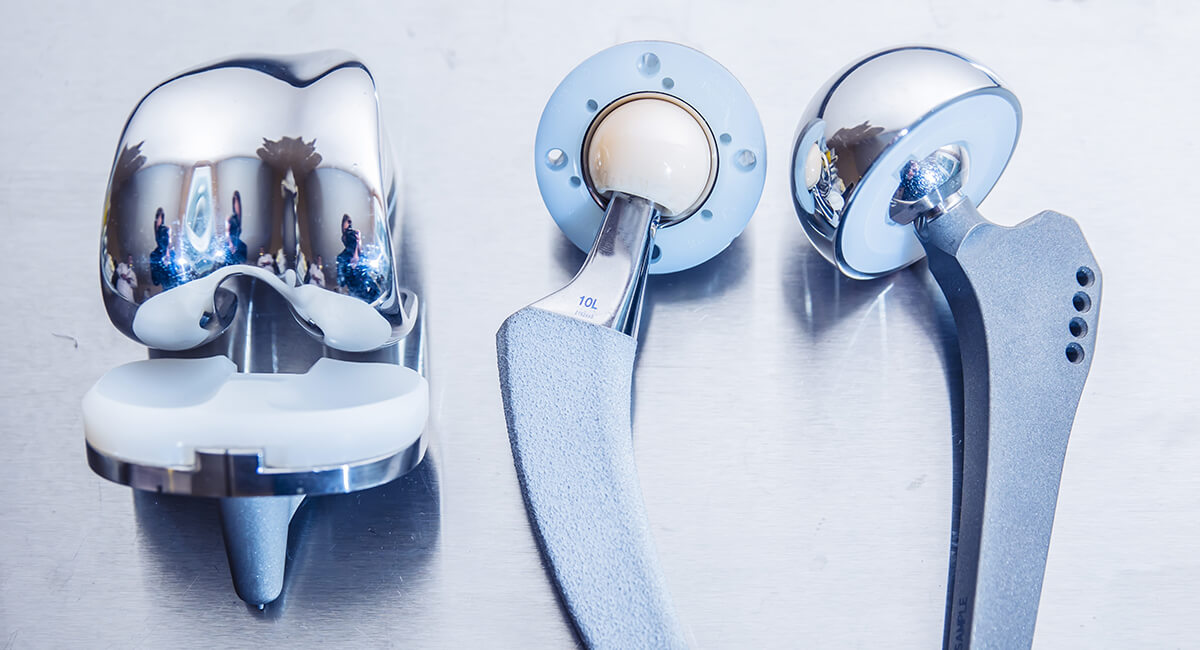
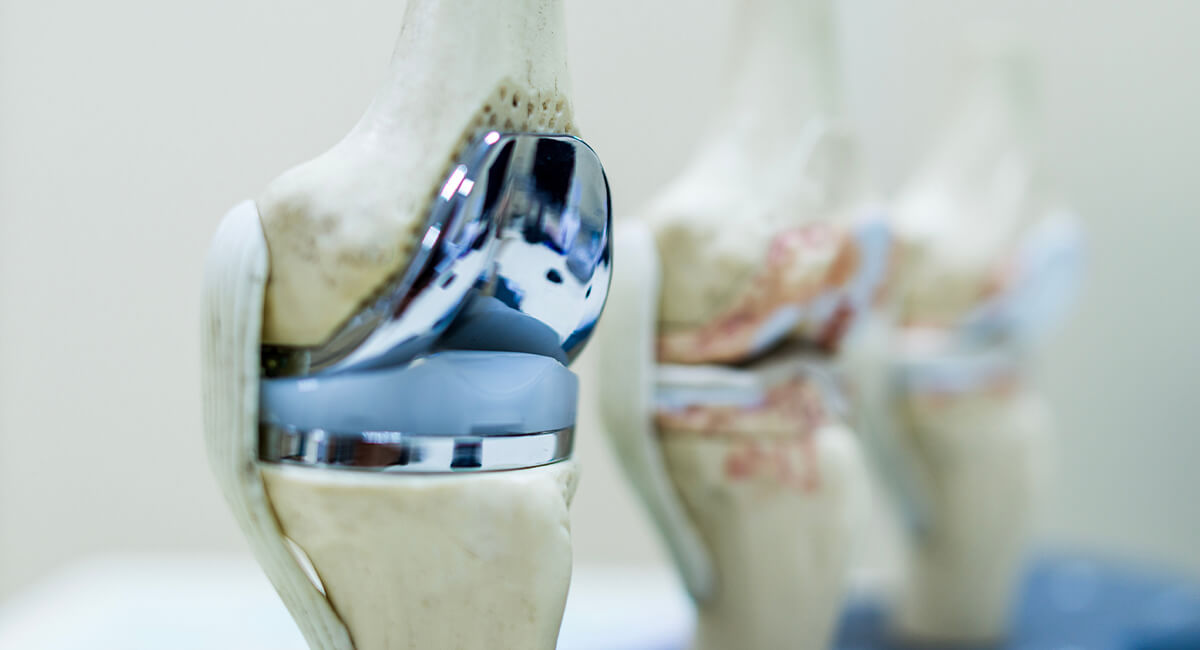
Artificial Joints: Fatigue testing per ISO 7206-6 (stemmed femoral components) and ISO 7206-8 (acetabular components) is non-negotiable. Wear testing per ISO 14242-1 (hip) and ISO 14243-1/3 (knee) must account for modern bearing couples, like highly cross-linked polyethylene against oxinium or ceramic.
Spinal Implants: ASTM F1717 remains the gold standard for rigid constructs. For cervical disc replacements, wear testing per ISO 18192-1 must simulate the complex coupled motion of the cervical spine.
Phase 3: Risk Mitigation & Uncovering Hidden Failure Modes
Corrosion & Degradation: Perform fretting corrosion testing at modular taper junctions, guided by ASTM F1875 and ASTM F2129. For absorbable devices like PLLA anchors or screws, degradation testing per ISO 13781 is critical to track strength loss over time in simulated physiological conditions.
Micro-Motion & Subsidence: For press-fit acetabular cups or vertebral body replacements, measuring subsidence under cyclic load provides critical data on initial stability, a key predictor of long-term osseointegration.
Computational Support: A well-validated FEA model per ASME V&V 40 can identify stress concentrations missed by physical tests and support the rationale for testing plan, strengthening the overall submission.
Biomechanical Testing Standards by Implant Category
Artificial Joints (Hip/Knee Replacements)
Artificial joints are subjected to cyclic loads equivalent to millions of gait cycles. Key tests include:
- Fatigue Testing: Standards like ISO 7206-4/6 specify methods for evaluating the endurance of femoral components. For instance, ISO 7206-6 requires stemmed femoral components to withstand 5 million load cycles (e.g., 2300 N maximum load) to simulate years of use.
- Wear Testing: ISO 14242 and ISO 14243 outline parameters for wear-testing machines, measuring material weight loss under simulated motion and lubrication.
- Additional Checks: Compression/torsion tests (e.g., ISO 7206-10 for femoral head static load resistance) and corrosion tests (e.g., ASTM F1875 for fretting corrosion at modular interfaces).
These tests address critical failure modes like implant loosening due to stress shielding or wear debris-induced osteolysis.
Spinal Implants
Spinal implants require unique testing due to the spine’s complex biomechanics. Standards include:
- Static and Dynamic Mechanical Tests: ASTM F1717, ASTM F1798 and ASTM F2706 evaluate spinal constructs in a vertebrectomy model (worst-case scenario). Tests measure compression bending, tensile bending, and torsion to ensure stability after spinal fusion.
- Wear Tests: ISO 18192 defines a standardised test method for evaluating the wear of both lumbar and cervical total disc replacements under simulated physiological conditions.
Sports Medicine and Trauma Products
Devices like sutures, anchors, and plates face high tensile and cyclic loads. Key standards include:
- Tensile Testing: YY/T 1832-2022 specifies methods for suture, measuring breaking strength and elongation.
- Fatigue Performance: Standards like YY/T 0965 evaluate anchors and plates under repetitive loading.
- Degradation Tests: For absorbable materials, tests track strength loss over time.
These ensure devices withstand forces during activities like ligament reconstruction or fracture healing.
Regulatory Pathways: FDA, CE, and NMPA Requirements
FDA (U.S. Market)
- 510(k) Pathway: For moderate-risk devices (e.g., trauma plates), manufacturers must demonstrate “substantial equivalence” to a predicate device. Biomechanical data (e.g., ASTM F1717 for spinal implants) is critical for proving equivalence.
- PMA Pathway: High-risk implants (e.g., total hips) require clinical data and extensive bench testing, including fatigue (ISO 7206-6) and wear (ISO 14242) studies.
CE Marking (European Market)
MDR Compliance: Implants must meet general safety requirements via notified body audits. Standards like ISO 7206 series serve as harmonised benchmarks.
NMPA (China Market)
- Classification-Based Approval: Class III implants (e.g., joints) require full technical documentation, including biomechanical test data.
- Local Standards: Standards like YY/T 1832 for sutures are often aligned with ISO but may have additional requirements.
Personalisation, Real-World Data, and Continuous Assurance
The future is already here. For 3D-printed, patient-specific implants, standardised tests are insufficient. The strategy shifts to validating the manufacturing process (ASTM F3302 for Additive Manufacturing) and creating patient-specific FEA models that inform a risk-based, specimen-specific physical test protocol.
Furthermore, post-market surveillance is increasingly biomechanical. Retrieval analysis of explained devices provides the ultimate “real-world” test data. Building a strategy for systematic retrieval testing – measuring wear, analysing fracture surfaces, assessing corrosion – closes the loop, feeding invaluable data back into the design and risk management process, as envisioned by ISO 13485:2016‘s emphasis on post-market surveillance.
Endnote
In conclusion, mastering the complex landscape of implant biomechanics today requires a paradigm shift. It demands moving from a reactive, standards-driven checklist to a proactive, risk-informed, and strategic validation culture. The most successful organisations will be those that view biomechanical testing as a critical source of competitive intelligence, a tool that de-risks development, accelerates intelligent regulatory submission, and ultimately, builds an unshakeable foundation for patient safety and commercial success. The question is no longer just “Will it pass the test?” but “Do we truly understand how and why it will succeed in the human body for years to come?“.
Disclaimer. The views and opinions expressed in this article are solely those of the author and do not necessarily reflect the official policy or position of Test Labs Limited. The content provided is for informational purposes only and is not intended to constitute legal or professional advice. Test Labs assumes no responsibility for any errors or omissions in the content of this article, nor for any actions taken in reliance thereon.
Get It Done, With Certainty.
Contact us about your testing requirements, we aim to respond the same day.
Get resources & industry updates direct to your inbox
We’ll email you 1-2 times a week at the maximum and never share your information