Biological Evaluation and Me

Article Summary
A personal reflection on how biological evaluation shaped the author’s life, from life-saving but imperfect neonatal blood bags to growth-hormone therapies and early medical devices, and how these experiences now inform a human-centred approach to designing safer, smarter medical technologies guided by modern biocompatibility standards.Article Contents
Introduction
For over three quarters of my life, biological evaluation meant absolutely nothing to me. But in this last quarter of my life, I’ve come to realise just how much biological evaluation has shaped me. Not just as a professional working in medical device development, but as a person whose very existence was influenced by it long before I even knew what it was.
It’s a personal story about life, design, and the invisible threads that connect us to the technologies that sustain us.
Early Medical Devices
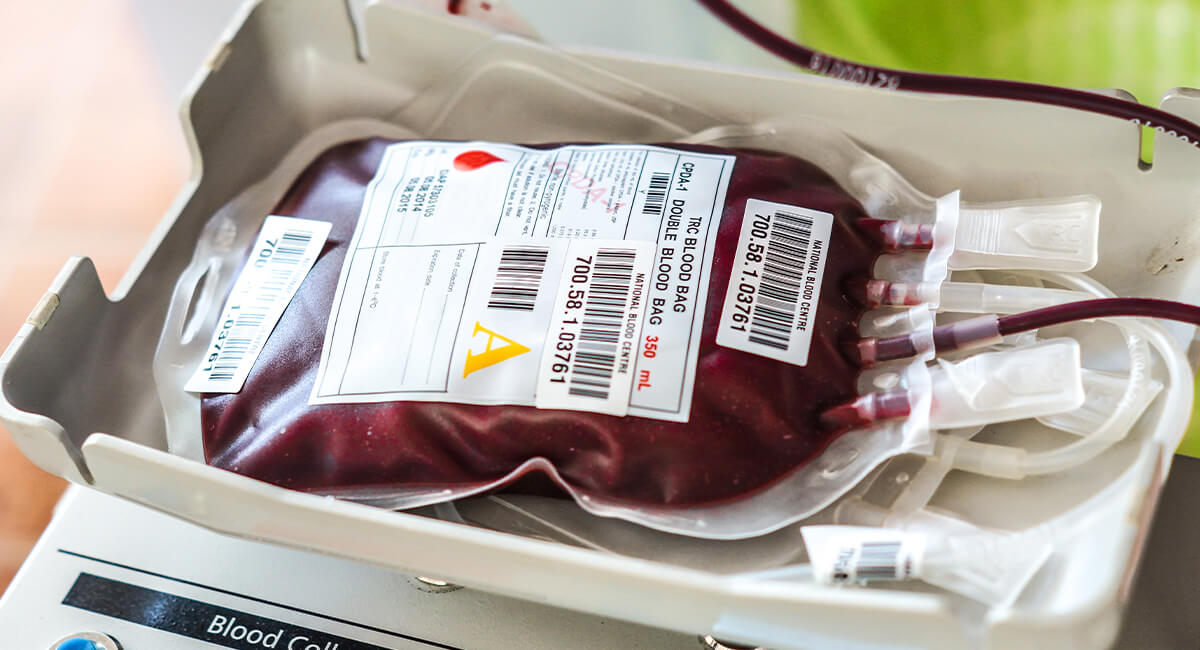
I was born in Dublin, four weeks premature, and I wasn’t a healthy baby. Within days I needed two full blood exchange transfusions to survive. Those transfusions used blood stored in flexible plastic blood bags, a medical innovation of their time. Plastic blood bags were life-saving, efficient, and easy to use. And without them, I wouldn’t be here today. But like all technologies, they carried a hidden complexity.
In 2012, while reading a book about plastics, I stumbled across something that stopped me cold: the blood bags used in the 1970s were made from PVC (polyvinyl chloride), softened with a plasticiser called DEHP (di(2-ethylhexyl) phthalate). DEHP made the bags flexible, but it didn’t stay locked inside the material. It leached into the stored blood, particularly into the lipid components and in the process, it entered the bodies of every patient who received transfused blood. Research has shown that DEHP exposure can disrupt hormone systems and affect growth and development in premature infants. For me, that discovery was like uncovering a missing piece of my own medical history.
Growth and Diagnosis
By the time I was seven, it was clear I was small for my age. You couldn’t not notice that I was by a long way the shortest in my class and looked several years younger than my friends. By pure chance, or maybe fate, my father struck up a conversation with a paediatrician who specialised in growth disorders. He was just starting a new clinical trial using biosynthetic human growth hormone and was happy to run some tests to see if I would qualify. Eventually, tests revealed the reason: my bone age was four years behind my chronological age.
I was enrolled, and that began my next chapter, one that introduced me to a new generation of medical devices. At first, treatment involved vials and syringes, which required precise dosing and refrigeration, not ideal for a young child, and something my mother hated having to administer to me.
Later came something revolutionary: the Owen Mumford auto-injector. This rather large device allowed me to self-administer my growth hormone. It wasn’t just a leap in convenience. It was a lesson in user-centred design; simple, reliable, empowering.
Years of treatment meant years of blood tests too. Some went smoothly, others left massive bruises. But I was always fascinated by the devices being used – vacuum tubes, cannulas, the way everything clicked together with purpose. In hindsight, that early curiosity probably set the foundations for my future in design and engineering.
What Biological Evaluation Means
When I first started working in medical device design, the term biological evaluation finally appeared in my professional world. At first, it felt like an abstract regulatory requirement, a set of tests and reports to prove that materials were safe. But over time, and especially after understanding my own story, its taken on a much deeper meaning.
Biological evaluation is, in essence, the science of asking how materials and the human body interact. It’s about anticipating how a polymer, adhesive, coating, or extractable substance might behave once it leaves the design studio and enters a living system.
In the 1970s, those questions weren’t being asked in the same way. The focus was on immediate function and safety: will this device work, and will it save lives? The long-term effects of leachables like DEHP weren’t yet understood. And in fairness, at that time, survival was the priority. But medicine evolves, and with it, so does our understanding of risk. Today, thanks to decades of learning, biological evaluation is central to how we design and regulate medical devices.
Frameworks like ISO 10993 and ISO 14971 guide how we assess biocompatibility, toxicity, irritation, sensitisation, and long-term systemic effects. We don’t just test for what we can see – we test for what we can’t yet predict. It’s the difference between reacting to problems and preventing them. Between saving lives and safeguarding quality of life.
Reflection: Benefit and Risk
So, am I angry that the blood bags that saved my life may also have stunted my growth? Honestly – no. Because in medical device development, everything comes back to benefit–risk analysis. In my case, the benefit was life itself. The risk was what came after – smaller stature, delayed growth, and a long journey of injections and tests. But I lived. I thrived. And I gained a unique understanding of the delicate balance at the heart of our industry.
Those blood bags did their job. They worked. And from them, the entire field learned valuable lessons about materials, safety, and human biology. In fact, my story isn’t one of blame – it’s one of progress.
Today, DEHP is being phased out of most medical applications. Blood bags, IV tubing, and catheters are now made from DEHP-free or PVC-free materials like TPE or polyolefin blends. These materials undergo rigorous biological evaluation to ensure they won’t cause harm decades later. That’s the legacy of learning. Not perfection, but improvement.
The Personal Perspective
As someone now working in medical device development, I often find myself in meetings discussing materials, coatings, leachable and extractables testing – the very essence of biological evaluation. But I never see those discussions as dry or procedural.
For me, they’re personal. They’re about empathy. Because I know what it means to be the patient on the other end, the person whose life, growth, and wellbeing depend on the materials we choose.
When I talk about human-centred design, I don’t just mean usability or ergonomics. I mean designing with an understanding of the body, the biology, and the lifetime consequences that our choices can have. Biological evaluation, in that sense, is empathy made measurable. It’s how we engineer trust into every device we make.
Progress in Device Safety
With hindsight, I’m also aware of how fortunate I was. My father happened to stand next to a paediatrician who specialised in growth hormone disorders. That single, chance encounter gave me access to a pioneering treatment that shaped my health and my future. I’m grateful for that and for the technology, science, and compassion that made it possible.
So no, I’m not angry about what those blood bags did. If anything, I’m thankful. They gave me life, perspective, and purpose. They gave me the opportunity to work in a field where every design decision, every material choice, and every evaluation matters, because behind every device is someone like me.
Closing Thought
When I look at biological evaluation today, I don’t see it as a box to tick. I see it as the continuation of a promise: every new generation of medical devices will be safer, smarter, and more human than the last.
For me, biological evaluation isn’t just a technical discipline. It’s a deeply human one. Because the story of how materials meet biology and how design meets life is, quite literally, the story of me.
Disclaimer. The views and opinions expressed in this article are solely those of the author and do not necessarily reflect the official policy or position of Test Labs Limited. The content provided is for informational purposes only and is not intended to constitute legal or professional advice. Test Labs assumes no responsibility for any errors or omissions in the content of this article, nor for any actions taken in reliance thereon.
Get It Done, With Certainty.
Contact us about your testing requirements, we aim to respond the same day.
Get resources & industry updates direct to your inbox
We’ll email you 1-2 times a week at the maximum and never share your information