The Role of Haptic Feedback in the Next Generation of Surgical Robotics

Article Summary
Haptic feedback is a critical missing component in surgical robotics, limiting precision, increasing cognitive load, and constraining training and AI development. Integrating touch into robotic systems could significantly improve clinical outcomes, enable better skill transfer, and unlock new capabilities in data-driven surgery.Article Contents
Why Haptic Feedback is the Missing Link in Surgical Robotics
Robotic-assisted surgery has transformed modern healthcare, offering improved precision, reduced invasiveness, and enhanced reproducibility across a growing range of procedures. From urology and gynaecology to orthopaedics and cardiovascular interventions, surgical robots have become an integral part of operating rooms worldwide.
Yet, despite these advances, one critical human capability remains largely absent from many robotic systems: the sense of touch. Haptic feedback technology that conveys tactile and force sensations to the user represents one of the most important frontiers in surgical robotics, with significant implications for safety, training, regulatory oversight, and clinical outcomes.
Why the Lack of Haptic Feedback Increases Cognitive Load in Robotic Surgery
In current robotic surgery, the loss of haptic feedback forces surgeons to rely on “visual haptics” interpreting tissue deformation on a screen to estimate force. While expert surgeons adapt, this compensation comes at a high price: increased cognitive load.
When the brain must constantly calculate force visually rather than feeling it instinctively, mental fatigue sets in faster. This “sensory subtraction” removes the surgeon’s ability to perform subconscious checks like palpating a vessel to find a pulse or assessing tumour margins through stiffness. Restoring touch isn’t just about comfort. It is about freeing the surgeon’s mind to focus on complex decision-making rather than basic motor sensory estimation.
What Is Haptic Feedback in Surgical Robotics?
Haptic systems typically combine force sensors, actuators, and control algorithms to relay tactile information from the surgical site back to the surgeon’s interface.
These systems may provide:
- Force feedback: Indicating resistance or pressure applied to tissue.
- Tactile feedback: Conveying texture, vibration, or surface changes.
- Constraint-based feedback: Guiding motion to prevent unsafe actions (often called “virtual fixtures”).
The challenge lies not only in accurately measuring forces at the instrument tip but also in delivering feedback that is intuitive, timely, and clinically meaningful without overwhelming the surgeon.

How Haptic Feedback Improves Surgical Precision and Tissue Identification
The clinical argument for haptics extends beyond preventing accidents. It is about redefining surgical precision. In delicate procedures like micro-anastomosis or mitral valve repair, the difference between a secure knot and a torn vessel is often measured in millinewtons. Haptic feedback provides the “force transparency” required to operate within these thin margins of error.
Furthermore, haptics reintroduces the diagnostic capability of palpation. A visual camera cannot “see” the stiffness of a tumor buried beneath healthy tissue, but a haptic-enabled probe can “feel” it. By restoring the ability to differentiate tissue types based on elasticity and texture, we empower surgeons to make better intraoperative decisions regarding resection margins, potentially reducing recurrence rates in oncology patients.
The Role of Haptic Feedback in Surgical Training and Skill Development
One of the most promising applications of haptic technology lies in surgical education. Simulation-based training already plays a growing role in preparing surgeons for robotic procedures. Incorporating realistic haptic feedback into simulators can enhance muscle memory, improve force awareness, and accelerate skill acquisition.
Furthermore, standardised haptic cues could support objective assessment of surgical performance, enabling data-driven evaluation of proficiency. This has implications not only for training programs but also for credentialing and continuous professional development.
Engineering Challenges of Haptic Feedback: Sterilisation, Latency, and Control
Despite its promise, the engineering hurdles for surgical haptics are immense. The central paradox is placing highly sensitive electronics at the instrument tip where they are most effective while subjecting them to the harsh, high-heat, high-pressure environment of autoclave sterilisation.
Additionally, there is the “loop stability” challenge. For haptics to feel real, the delay between the sensor detecting force and the surgeon feeling it must be virtually non-existent (sub-10 milliseconds). Any latency in this loop does not just feel “laggy”; it can cause the robotic arm to oscillate or vibrate uncontrollably, posing an immediate risk to the patient. Solving these issues requires a tight integration of biocompatible materials, edge computing, and ultra-fast control theory that pushes the boundaries of current mechatronics.
Regulatory Considerations for Haptic-Enabled Surgical Robotics (MDR & FDA)
As haptic feedback becomes more prevalent, regulatory frameworks will need to evolve accordingly. From an MDR and FDA perspective, haptic-enabled robotic systems introduce additional layers of complexity in terms of software validation, human factors engineering, and risk management.
Key considerations include:
- Verification and validation of force-sensing accuracy and reliability.
- Human factors and usability studies to assess user interpretation of feedback.
- Cybersecurity and software lifecycle management, particularly for AI-assisted control systems.
- Post-market surveillance, capturing real-world performance and user feedback.
Manufacturers must clearly demonstrate that haptic feedback enhances rather than compromises safety and effectiveness. Transparent documentation and early engagement with regulatory authorities will be critical.
How Haptic Data is Powering AI in Surgical Robotics
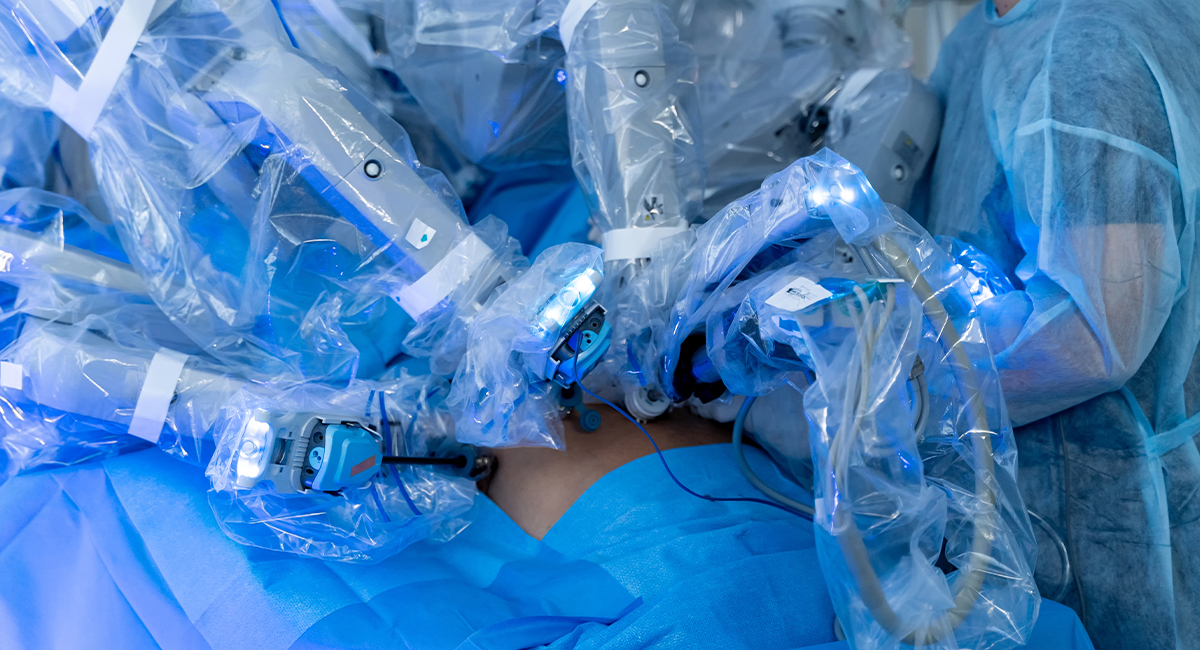
Perhaps the most profound impact of haptics lies in data generation. Currently, surgical robots record video (vision) and kinematics (movement), but they are “blind” to the forces being applied. By integrating force sensors, we begin to digitise the sense of touch.
This data is the missing link for surgical AI. To train an autonomous algorithm to suture tissue, the system must know not just where to move, but how hard to pull. Haptic data streams will become the foundational training sets for the next generation of smart assistants enabling systems that can automatically detect tissue types, compensate for organ movement, and execute sub-millimetre tasks with a consistency no human hand can match.
The Future of Surgical Robotics: Restoring the Sense of Touch
Haptic feedback represents more than a technical enhancement; it is a step toward re-humanising robotic surgery by restoring a fundamental sensory connection between surgeon and patient. While challenges remain, the integration of touch into surgical robotics holds significant promise for improving safety, training, and clinical outcomes.
As the MedTech industry navigates evolving regulatory landscapes and rising expectations for performance and transparency, thoughtful development and validation of haptic technologies will be essential. The future of robotic surgery may well depend on how effectively we bring the sense of touch back into the operating room.
Disclaimer. The views and opinions expressed in this article are solely those of the author and do not necessarily reflect the official policy or position of Test Labs Limited. The content provided is for informational purposes only and is not intended to constitute legal or professional advice. Test Labs assumes no responsibility for any errors or omissions in the content of this article, nor for any actions taken in reliance thereon.
Get It Done, With Certainty.
Contact us about your testing requirements, we aim to respond the same day.
Get resources & industry updates direct to your inbox
We’ll email you 1-2 times a week at the maximum and never share your information